Elite Offshore Pvt Ltd offers OPITO-approved Authorized Gas Tester (AGT) training through e-learning in collaboration with Mintra. This comprehensive program equips participants with the essential skills and knowledge to ensure safety in industrial environments, particularly during confined space entry and operations.
The training covers crucial topics such as understanding the roles and responsibilities of an AGT, gas detection and monitoring equipment, the hazards and properties of gases, safe systems of work, and confined space entry procedures. Participants also learn to interpret gas test results and document their findings accurately.
Delivered through an interactive e-learning platform, the course allows flexibility and convenience, making it ideal for offshore workers with varying schedules. The program includes practical simulations and exercises to provide hands-on experience. By completing this training, participants receive industry-recognized certification, demonstrating their competency and commitment to maintaining high safety standards in their workplaces.
Expert Perspective
Industry Insight: Read our latest deep-dive on OPITO AGT Standards and our partnership with Mintra on LinkedIn.
What will I learn?
- 1. Confined space criteria .
- 2. The hazards of operations in an oxygen deficient, toxic / flammable environment .
- 3. Carrying out a suitable and sufficient risk assessment .
- 4. Interpreting operational requirements .
- 5. Selecting and using PPE and RPE .
- 6. Working within the Permit to Work system .
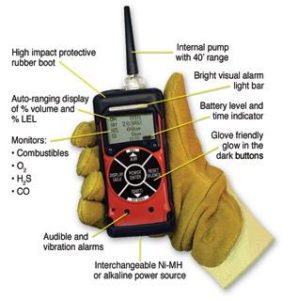
- 7. The operating principles of atmosphere monitoring and measuring equipment .
- 8. Gas detector pre-start checks .
- 9. Calibrating the instruments used in atmospheric testing .
- 10. The behaviour of different flammable and toxic gases.
- 11. The range and frequency of tests .
- 12. Acceptable levels of flammable and toxic gases .
- 13. Performing gas tests in sequence .
- 14. Obtaining a representative atmosphere sample .
- 15. Where to site ongoing monitoring equipment.
- 16. Hot work and the production of flammable and toxic gases.
- 17. The principles of hot work gas testing.
- 18. The hazards and properties of flammable gases.
- 19. The strengths and weaknesses of flammable and toxic gas detection equipment.
- 20. Locating sentinel styled equipment for optimum benefit (Fixed Gas Detector).
- 21. Detectors used for the flammable product.
- 22. Hot work and the creation of toxic products .
- 23. How a flammable gas or vapour clouds could arrive at the hot work site.
- Those involved in working in a confined space
- Those involved in performing safety watch duties for hot work activities
- Those approving and authorising the Safety Work Permit within a confined space
- Q1. What is the Authorised Gas Tester (AGT) course?
The AGT course trains personnel to safely test and monitor oxygen, flammable and toxic gases in hazardous areas, confined spaces and during hot work. - Q2. Is the Authorised Gas Tester course OPITO approved?
Yes. Elite Offshore offers OPITO-approved Authorised Gas Tester (AGT) training in line with the applicable OPITO training standard. - Q3. How long does the AGT course take to complete?
The Elite Offshore AGT course has an 8-hour duration and is available through e-learning for flexible study. - Q4. Can I complete the AGT course online?
Yes. The course is available through e-learning, allowing offshore and industrial professionals to complete the training remotely at their convenience. - Q5. Who should take the Authorised Gas Tester course?
It is suitable for personnel involved in confined-space work, hot-work safety watch duties, gas testing, and those responsible for approving confined-space permits. - Q6. What topics are covered in the AGT course?
The training covers gas detection equipment, calibration and pre-start checks, gas hazards, LEL and oxygen levels, confined-space testing, hot-work gas testing, risk assessment and gas-test documentation. - Q7. Does the AGT course cover confined-space gas testing?
Yes. Learners are trained to assess confined-space atmospheres, take representative gas samples, interpret readings and understand safe testing and monitoring procedures. - Q8. Does the AGT course include hot-work gas testing?
Yes. The course covers testing for flammable gases before hot work, detector selection and setup, acceptable gas levels, monitoring requirements and related safety precautions. - Q9. What certificate do I receive after completing the AGT course?
After successfully completing the required course and assessment, learners receive certification for the OPITO-approved Authorised Gas Tester training. - Q10. Can international students take the AGT course with Elite Offshore?
Yes. The e-learning format allows learners from India and other countries to access the AGT training remotely, subject to the course and certification requirements.
-
AGT Course Overview
.
-
1.1 Confined Spaces Regulations1997
.
-
1.2 The Type Of Operations Being Tested For Flammable And Toxic-Gases
.
-
1.3 Potential Cumulative Hazards Of Operations
.
-
1.4 Risk Assessment
.
-
1.5. Understanding Responsibilities Within Safe Systems Of Work
.
-
1.6 Implications Of Statutory Requirements w.r.t Legislation,Code Of Practice etc.
.
-
1.7 Interpret Operational Requirements - Policies, Procedures etc.
.
-
1.8 PPE For Gas Testers
.
-
1.9 Appropriate Levels Of Respiratory Protective Equipment
.
-
1.10 Safe System Of Work
.
-
2.1 Various Types Of Atmospheric Flammable And Toxic Gas Detection Equipment
.
-
2.2 Determining The Extent Of The Test Boundaries
.
-
2.3 Instrument Calibration
.
-
2.4 Assistance for Equipment Issues
.
-
2.5 Accessing Operational Instructions
.
-
2.6 Operating Principles Of Atmosphere Monitoring And Measuring Equipment
.
-
2.7 Common Detector Failure Modes
.
-
2.8 Aspirating And Non-Aspirating Detectors
.
-
2.9 Equipment Required For Testing For Hydrocarbons In Inert Atmospheres
.
-
2.10 Gas Detector Pre-Start Checks
.
-
3.1 Document The Results And Advise Relevant Personnel
.
-
3.2 Interpreting Gas Test Results
.
-
ASSESSMENT
00:00:00
-
AGT 103 Testing For Flammable Gas In Preparation For Hot Work
.
-
ASSESSMENT
00:00:00
-
1.1 The Hazards And Properties Of Flammable And Toxic Gases
.
-
1.2 The Behaviour Of Different Gases
.
-
1.3 Gas Testing Frequency
.
-
1.4 Acceptable Gas Levels
.
-
1.5 The Implications Of WEL For Toxic Gases
.
-
1.6 The Implications Of LEL For Flammable Gases
.
-
1.7 Sequential Gas Testing
.
-
1.8 Setting Up Gas Detectors
.
-
1.9 Representative Atmosphere Sampling
.
-
1.11 Sampling Confined Spaces At A Distance To Avoid Air Intrusion Near Opening
.
-
1.12 Gas Testing In Inert Atmospheres
.
-
1.13 Site Portable Or Transportable Equipment For Continuous Atmosphere Monitoring
.
-
ASSESSMENT
00:00:00
-
1.1 Defining Hot Work
.
-
1.2 Confined Space Criteria
.
-
1.3 Operations For Flammable And Toxic Gas Testing
.
-
1.4 Responsibilities Of The Fire Watch
.
-
1.5 Responsibilities Of The Stand By Person
.
-
1.6 Responsibilities Of The Gas Monitor Role
.
-
1.7 How To Use And Care For PPE For Different Toxic And Flammable Gases Through Risk Assessment
.
-
1.8 How to Work Within The Safe Systems Of Work
.
-
1.10 The Behaviour Of Different Gases
.
-
1.9 The Hazards And Properties Of Flammable And Toxic Gases
.
-
1.11 How A Flammable Gas Or Vapour Clouds Could Arrive At The Hot Work Site
.
-
1.12 Impact Of Environmental Changes On Working Conditions
.
-
1.13 The Importance Of Regular Communication
.
-
1.14 Sources Of Assistance And Specialist Support
.
-
1.15 Completion Of Relevant Documentation
.
-
1.16 The Importance Of Checking The Controls On The Equipment
.
-
ASSESSMENT
00:00:00
-
MULTIPLE CHOICE QUESTIONS
00:00:00
Write a public review