Elite Offshore's Working at Height (WAH) training is
designed to equip workers with the essential skills and knowledge to safely
navigate elevated environments above 6 feet. Our comprehensive program ensures
participants are prepared to execute tasks with confidence, safety, and
efficiency.
Key Topics Covered
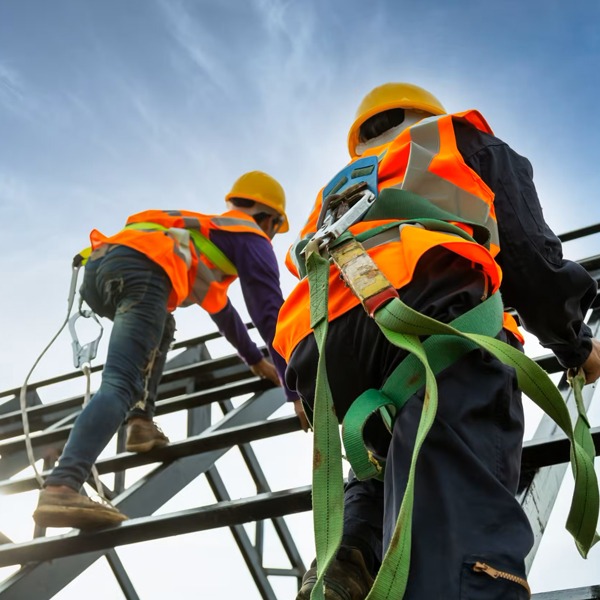
- Harness Usage: Learn
proper techniques for selecting and using harnesses to ensure safety while
working at height.
- Equipment Inspection:
Understand how to inspect and maintain safety equipment to ensure it is in
good working condition.
- Emergency Procedures: Gain
knowledge on emergency protocols, including rescue techniques and first
aid practices.
Hands-On Experience and Theoretical Knowledge
Led by experienced instructors, the training combines practical exercises
and theoretical sessions, allowing participants to build both the skills and
knowledge necessary for safe work practices at height.
Hazard Awareness and Risk Prevention
We emphasize hazard identification and prevention strategies, empowering
workers to mitigate risks and avoid accidents. Participants will learn how to
assess potential hazards in elevated environments and implement strategies to
reduce exposure to these risks.
Industry Standards and Compliance
The training aligns with industry best practices and regulatory standards,
ensuring compliance with safety guidelines and fostering a culture of safety
within your team.
Elevate your team's safety and efficiency with Elite Offshore's renowned Working
at Height (WAH) training program, ensuring a safer work environment
for all.
What will I learn?
- 1. Introduction to working at height
- 2. Understanding risks and hazards
- 3. Risk assessment and control measures
- 4. Fall prevention and protection
- 5. Safe work practices
- 6. Working with ladders
- 7. Use of mobile elevated work platforms (MEWPs)
- 8. Emergency preparedness
- 9. Environmental factors
- 10. Equipment inspection
- 11. Health and safety responsibilities
- 12. Suspension trauma
- 13. Case studies
- 14. Practical exercises and demonstrations
- Participants should be in good physical health to engage in activities at height.
- Must be at least 18 years old.
- Participants must be comfortable working at heights above 6 feet.
- Previous safety training in working at heights is preferred but not required.
- Active participation in hands-on training is required.
- Participants must bring or be provided with necessary PPE (helmet, harness, gloves).
- Basic understanding of English (or local language) for communication.
- 1. What is Working at Heights training?
Working at Heights training teaches participants how to identify fall hazards, use fall protection equipment correctly, and work safely on elevated surfaces, platforms, ladders and other height-related work areas. - 2. Who should take a Working at Heights course?
The course is suitable for workers, supervisors, technicians and safety personnel involved in construction, oil and gas, offshore, marine, industrial and maintenance activities where work at height is required. - 3. What are the main topics covered in Working at Heights training?
The training covers hazard identification, fall prevention and fall arrest systems, ladders, harnesses, anchor points, PPE inspection, safe work practices, emergency procedures and rescue planning. - 4. Is Working at Heights training useful for offshore oil and gas jobs?
Yes. It is particularly useful for offshore personnel who may work on elevated platforms, structures, scaffolding, ladders or other areas where fall hazards are present. - 5. Is there practical training in a Working at Heights course?
Yes. Practical exercises can include harness inspection and use, attachment to anchor points, safe ladder access, fall-protection equipment and height-rescue procedures. - 6. What PPE is used during Working at Heights training?
Typical equipment includes a full-body harness, lanyards, suitable anchor systems and other fall-protection PPE. Participants are also trained in pre-use inspection and correct equipment selection. - 7. Do I need previous experience to join Working at Heights training?
Previous work-at-height experience is generally not required for basic training, making the course suitable for personnel who need to develop safe working practices before undertaking height-related tasks. - 8. How long does Working at Heights training take?
The duration depends on the training format and course level. A combined theory and practical Working at Heights program can be completed as a structured one-day training course. - 9. Can I take Working at Heights training online?
Online availability depends on the specific course delivery and practical requirements. Where practical assessment is required, hands-on training may be necessary in addition to theory. - 10. Is a Working at Heights certificate required for offshore work?
Employers may require valid Working at Heights or fall-protection training for roles involving height-related hazards. The exact certification requirement depends on the employer, worksite and applicable industry standards.
Write a public review