Published - Mon, 17 Jun 2024

 Authorized Gas Tester (AGT) Training and Certification by Elite Offshore: Ensuring Safety in Industrial Environments

Authorized Gas Tester (AGT) Training and Certification by Elite Offshore: Ensuring Safety in Industrial Environments

Authorized Gas Tester (AGT) Training and Certification by Elite Offshore: Ensuring Safety in Industrial Environments - Key Insights & Details


In industrial environments, particularly within the oil and gas sector, the presence of hazardous gases poses a significant risk to the safety of personnel. The need for skilled professionals who can accurately detect and manage these risks cannot be overstated. One such role is that of the Authorized Gas Tester (AGT);  whose primary responsibility is to ensure the safety of workers during confined space entry and other potentially hazardous operations. Elite Offshore, a premier provider of safety and technical training, offers a comprehensive AGT training and certification program designed to equip individuals with the necessary skills and knowledge to perform this critical role effectively.


The Importance of AGT in Industrial Environments
Confined spaces in industrial settings often contain dangerous levels of toxic or flammable gases. These gases can lead to fatal accidents if not properly managed. An AGT plays a crucial role in preventing such incidents by:


1.Ensuring Safe Work Conditions: Before any operation in a confined space begins, an AGT tests the atmosphere to confirm it is safe for entry. This helps prevent exposure to harmful gases that could lead to asphyxiation, poisoning, or explosions.

2.Monitoring Ongoing Safety:
During operations, the AGT continuously monitors gas levels to detect any changes that could pose a risk. This ongoing vigilance is
 essential for maintaining a safe working environment.

3.Compliance with Regulations:
The AGT ensures that all gas testing and monitoring activities comply with industry regulations and safety standards, thereby
 avoiding legal and financial repercussions for the organization.

Roles and Responsibilities of an Authorized Gas Tester (AGT)

The role of an AGT comprises of a wide range of responsibilities, all aimed at ensuring safety in hazardous environments. These responsibilities include:

1. Conducting Pre-Entry Gas Testing

Before workers enter a confined space, the AGT conducts thorough gas testing to detect the presence of any hazardous gases. This involves using specialized equipment to measure gas concentrations and ensure they are within safe limits.

2. Continuous Monitoring
The AGT is responsible for continuously monitoring the atmosphere during operations. This includes periodic re-testing to detect any changes in gas levels that could compromise safety.

3. Equipment Calibration and Maintenance
The AGT must ensure that all gas detection equipment is properly calibrated and maintained. This involves regular checks and servicing to ensure accurate readings.

4. Implementing Safety Protocols
The AGT implements and enforces safety protocols, such as issuing permits to work, conducting risk assessments, and ensuring that all safety measures are in place before operations commence.

5. Emergency Response
In the event of a gas-related emergency, the AGT is responsible for initiating emergency response procedures, including evacuation and first aid. They must be prepared to act swiftly and decisively to protect the safety of all personnel.

6. Training and Advising
AGTs often take on a training role, educating other workers about the dangers of hazardous gases and the importance of gas testing. They also provide advice on best practices for working safely in confined spaces.

Authority of the AGT
The AGT holds significant authority in industrial settings, particularly regarding safety decisions. They have the power to:

- Halt operations if unsafe gas levels are detected.
- Deny entry to confined spaces until safety conditions are met.
- Enforce compliance with safety protocols and regulations.
- Issue permits for confined space entry and other hazardous operations.

This authority underscores the critical nature of their role in maintaining workplace safety.

Topics Covered in Elite Offshore's AGT Training

Elite Offshore's AGT training program is meticulously designed to cover all aspects necessary for the effective performance of an AGT. The program adheres to industry standards and includes the following key topics:

1. Understanding the Roles and Responsibilities of an AGT
The training begins with an overview of the roles and responsibilities of an AGT. This section emphasizes the importance of their role in ensuring workplace safety and outlines the ethical and legal obligations they must uphold.

2. Gas Detection and Monitoring Equipment
Participants are introduced to various types of gas detection and monitoring equipment. The training covers the principles of gas detection technology, the use of portable and fixed gas detectors, and the maintenance and calibration of equipment.

3. The Hazards and Properties of Gases
This module provides in-depth knowledge of common hazardous gases encountered in industrial settings. Participants learn about the physical and chemical properties of these gases, their health effects, and the conditions under which they become dangerous.

4. Safe Systems of Work
Participants are taught the importance of safe systems of work, including the implementation of permits to work, risk assessments, and emergency response plans. This module emphasizes the need for thorough planning and coordination to ensure safety.

5. Confined Space Entry Procedures
Confined spaces pose unique hazards that require specialized knowledge. This module covers the procedures for safe entry into confined spaces, including the identification of confined spaces, risk assessment, and control measures.

6. Interpreting Gas Test Results and Documentation
Participants are trained to accurately interpret gas test results and document their findings. This includes understanding gas concentration levels, making informed decisions based on data, and maintaining accurate records for compliance purposes.

Benefits of Elite Offshore’s AGT Training Program

Elite Offshore’s AGT training program offers several benefits that make it a preferred choice for individuals and organizations alike:

Comprehensive Curriculum
The training program covers all essential topics, ensuring that participants gain a thorough understanding of their roles and responsibilities as AGTs. The curriculum is designed to meet industry standards and provide practical knowledge and skills.

Flexible E-Learning Platform
Myntra Global's E-learning platform allows participants to access training materials at their convenience. This flexibility is particularly beneficial for offshore workers with irregular schedules or those who cannot attend traditional classroom training.

Interactive and Engaging Learning Experience
The e-learning platform incorporates a variety of interactive elements, such as simulations, videos, and quizzes, to create an engaging learning experience. These interactive features enhance knowledge retention and provide practical, hands-on experience.

Industry-Recognized Certification
Upon successful completion of the training program, participants receive certification by OPITO that is recognized throughout the industry. This certification demonstrates their competency as Authorized Gas Testers and their commitment to maintaining high safety standards.

Cost-Effective Training Solution
The e-learning format reduces the need for travel and accommodation expenses associated with traditional classroom training. Additionally, the scalability of e-learning allows organizations to train multiple employees simultaneously, reducing overall training costs.

Thus the role of an Authorized Gas Tester is critical in ensuring the safety of industrial environments, particularly during confined space entry and operations. Elite Offshore’s AGT training and certification program provides a comprehensive and flexible training solution that equips individuals with the necessary skills and knowledge to perform this vital role effectively. By covering essential topics such as gas detection and monitoring, the hazards and properties of gases, safe systems of work, and confined space entry procedures, the program ensures that participants are well-prepared to uphold safety standards in their workplaces. 

For any further information, please contact training@eliteoffshore.in or call +91-22-4970 4933 or +91-80 9747 2277. You may visit our website https://eliteoffshore.in (for all courses) or https://ecademy.eliteoffshore.in (for e-learning courses).

Visit our training centre at below address:
Elite Offshore Pvt. Ltd.
G- 5, Platform Level, Tower-3, Belapur Railway Station Complex, Sector-11, C.B.D. Belapur, Navi Mumbai-400614.
Contact No. +91-80-9747-2277, +91-22-4970-4933, +91-22-4600-3839
Email: info@eliteoffshore.in or training@eliteoffshore.in

Created by

Elite Offshore Pvt Ltd

Elite Offshore Pvt Ltd, established 2015, headquartered in CBD Belapur, Navi Mumbai, is a renowned training institution specializing in safety and skill courses for the offshore and industrial sectors. With a commitment to excellence, Elite Offshore offers a wide range of courses designed to meet the specific needs of professionals working in challenging environments. These courses include BOSIET, HUET, HLO, HDA, OERTM, OERTL, and more, ensuring that individuals are equipped with the necessary knowledge and skills to excel in their roles. As a trusted name in the industry, Elite Offshore is known for its state-of-the-art facilities, experienced trainers, and adherence to international safety standards. Through their training programs, they aim to enhance safety, efficiency, and proficiency in offshore and industrial operations, contributing to the success and well-being of professionals and organizations alike. Learn more about Elite Offshore Pvt Ltd and their comprehensive training solutions at https://eliteoffshore.in. Elite Offshore Pvt Ltd was founded with a clear goal - to enhance safety standards and promote unmatched skills development in the offshore industry. Established in 2015, the institute quickly gained a reputation as a reliable partner for individuals and organizations seeking exceptional training programs. With a commitment to delivering top-quality training solutions, Elite Offshore has become a recognized name in providing complete safety and skill development programs for the industrial and offshore oil and gas sector. It's not just a training center but a hub of knowledge, safety, and professional growth.

Elite Offshore Pvt Ltd: Leading the Way in Safety and Skill Training 

Founded with a vision to revolutionize safety and skill training in the offshore and industrial sectors, Elite Offshore Pvt Ltd stands tall as a beacon of excellence in CBD Belapur, Navi Mumbai. Established in 2015, Elite Offshore has rapidly emerged as a trusted name, delivering top-notch courses and certifications to professionals across various industries.

Inception and Growth:

Elite Offshore Pvt Ltd was born in 2015 from a passion for ensuring the utmost safety and efficiency in offshore and industrial operations. The founders envisioned a training institution that would not only impart essential skills but also instill a culture of safety consciousness among professionals.

In the early days, Elite Offshore started its journey with a modest team of highly skilled trainers and a commitment to providing cutting-edge training facilities. The institution quickly gained recognition for its hands-on approach, practical training modules, and adherence to international safety standards.

Courses Offered:

One of the key pillars of Elite Offshore's success is its diverse range of courses catering to the specific needs of the offshore and industrial sectors. The institution offers a comprehensive suite of training programs, including:

1. Basic Offshore Safety Induction and Emergency Training (BOSIET): Equipping professionals with essential survival skills and emergency response training for offshore environments.

2. Helicopter Underwater Escape Training (HUET): Providing the knowledge and techniques needed to escape safely from a submerged helicopter.

3. Helideck Assistant (HLO): Training individuals in the safe and efficient management of helideck operations.

4. Hazardous Area Classification (HDA): Understanding the classification and management of hazardous areas in industrial settings.

5. Offshore Emergency Response Team Member (OERTM): Developing the skills required to be part of an emergency response team in offshore installations.

6. Offshore Emergency Response Team Leader (OERTL): Training individuals to lead and coordinate emergency response efforts in offshore environments.

7. Liberia approved OIM, Barge Supervisor, Ballast Control Operator, Maintenance Supervisor.

and many more. Visit
https://eliteoffshore.in for more details.

Excellence in Training:

What sets Elite Offshore apart is its unwavering commitment to excellence in training. The institution boasts state-of-the-art training facilities equipped with the latest technology and simulators. This allows participants to experience real-life scenarios in a controlled environment, enhancing their learning and preparedness.

Moreover, Elite Offshore's team of seasoned trainers brings a wealth of industry experience and expertise to the classroom. Their practical insights and hands-on approach ensure that participants not only grasp theoretical concepts but also develop the necessary skills to excel in their roles.

Industry Recognition and Achievements:

Over the years, Elite Offshore Pvt Ltd has garnered numerous accolades and certifications for its exceptional training standards. The institution is proud to be accredited by prestigious bodies such as IADC, Liberia Govt etc, ensuring that its courses meet the highest industry standards.

Elite Offshore has also forged strong partnerships with leading companies in the offshore and industrial sectors. These collaborations have enabled the institution to stay abreast of industry trends, emerging technologies, and evolving safety regulations.

Future Ambitions:

Looking ahead, Elite Offshore Pvt Ltd has ambitious plans to further expand its footprint in the realm of safety and skill training. The institution aims to:

1. Enhance Course Offerings: Continuously innovate and introduce new courses that address the evolving needs of the offshore and industrial sectors.

2. Global Expansion: Explore opportunities to establish training centers in key offshore hubs worldwide, catering to an international clientele.

3. Research and Development: Invest in research and development initiatives to develop advanced training methodologies and simulators.

4. Corporate Social Responsibility: Engage in meaningful CSR initiatives aimed at promoting safety awareness and skill development in local communities.

5. Industry Partnerships: Strengthen collaborations with industry leaders, academic institutions, and regulatory bodies to drive excellence in safety and skill training.

Conclusion:

In a world where safety and efficiency are paramount in offshore and industrial operations, Elite Offshore Pvt Ltd stands as a beacon of excellence. With its unwavering commitment to providing top-tier training, cutting-edge facilities, and a team of industry-leading trainers, the institution continues to shape the future of safety and skill development.

As Elite Offshore embarks on its journey towards greater heights, its mission remains clear: to empower professionals with the knowledge, skills, and confidence to navigate the challenges of the offshore and industrial sectors safely and effectively.

For more information about Elite Offshore Pvt Ltd and its range of courses, visit https://eliteoffshore.in or write to info@eliteoffshore.in or training@eliteoffshore.in.

View profile

Comments (0)

Search
Popular categories
Latest blogs
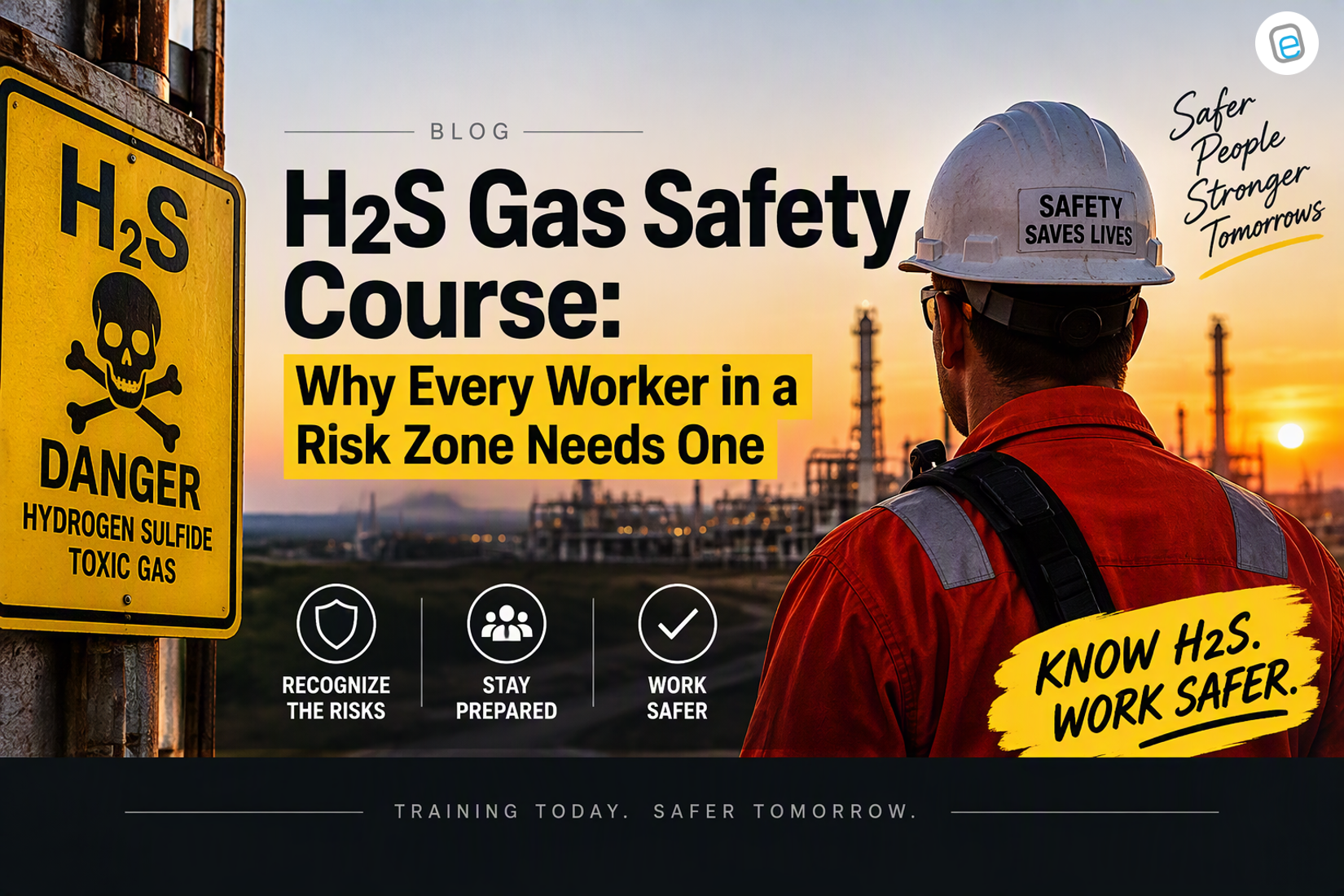
H2S Gas Safety Course: Why Every Worker in a Risk Zone Needs One
You Can't See It, and Soon You Can't Smell It EitherAsk anyone who has worked on a rig, in a refinery or around a sewer line about hydrogen sulphide, and you'll usually get a quiet pause before the answer. H2S is one of those hazards that people in the industry respect, because it doesn't give you much of a warning.At low levels, it smells like rotten eggs. That sounds like a built-in alarm, but it isn't. At higher concentrations, the gas dulls your sense of smell, so the odour seems to disappear just when the danger is rising. People have walked deeper into a space thinking "the smell is gone, so it must be fine." It's one of the most dangerous misunderstandings in industrial safety.That is why a proper H2S gas safety course isn't a box to tick. It is training that teaches you to trust your equipment and your procedures instead of your nose.What Exactly Is Hydrogen Sulphide?Hydrogen sulphide (H2S) is a colourless, toxic and flammable gas. It forms when organic material breaks down without oxygen, and it also occurs naturally in crude oil and natural gas. That is why you'll find it in: Offshore platforms and drilling rigs Land rigs and oilfields Refineries and petrochemical plants Wastewater and sewage treatment plants Drains, manholes, tanks and confined spaces It's also heavier than air. So it doesn't float away. It settles in low-lying areas, pits, tanks and enclosed spaces, which are exactly the places workers are sent to inspect or clean.You may also hear it called sewer gas, stink damp or sour gas. Different names, same hazard.Why H2S Training Matters So MuchExposure limits for H2S are measured in parts per million (ppm), tiny amounts. Low concentrations can irritate your eyes and throat. Higher ones can cause headaches, dizziness and breathing trouble. At very high concentrations, a person can collapse within moments. Exact exposure limits vary by regulator and country, and a good course teaches you how they're defined and why some people are affected more than others.The risk doesn't end with the first victim, either. Many incidents get worse because a coworker rushes in to help without protection. Training teaches you the harder but safer lesson: raise the alarm, protect yourself first, then help.What You Learn in Elite Offshore's H2S (Hydrogen Sulphide Gas Safety) CourseAt Elite Offshore Pvt Ltd, we built this course for people who actually work around H2S, not just for those who want a certificate. Over 8 hours of theory and practical exercises, you'll cover: How H2S forms and where it's found, including the other names used for it Its properties: odour, density and flammability Understanding ppm and what the numbers on your detector actually mean Occupational exposure limits and the factors that make one person more sensitive than another Types of H2S detectors and respiratory protection equipment Pre-use checks on personal detectors and escape breathing apparatus (EBA) Operating a personal H2S detector, including functional checks and what to do when it alarms Donning an escape breathing apparatus with both mask and hood, correctly and within 30 seconds Connecting to and disconnecting from a pressurised cascade breathing system safely Responding to alarms and emergencies while looking after yourself and the people around you The equipment covered includes H2S detectors, SCBA sets, ELSA escape sets and cascade breathing systems, depending on the training scope.The 30-second donning drill is the part many people remember. It's one thing to read about an escape set, and quite another to get it on, sealed and working while an alarm is sounding. We make sure you can do it without fumbling.Who Should Take This Course?This H2S safety training is a good fit if you work in or are heading into: Offshore oil and gas Land rigs and drilling operations Refineries and petrochemical plants Wastewater and sewage treatment facilities Municipal work such as drainage and manhole cleaning Any workplace where H2S might be present If you're planning to build a career offshore, this is one of those certificates that employers often expect to see, so doing it early can save you a scramble later.Who Can Enrol? (The Requirements) You should generally be at least 18 years old. You should be able to read and understand the course material and instructions. A medical check may be required to confirm you're fit to use breathing apparatus. Depending on the training format, you may be asked to bring your own PPE. No previous H2S experience is needed. Basic workplace safety awareness helps, but we start from the fundamentals. Online or Classroom: Your Choice Not everyone can take time off to sit in a classroom, especially offshore professionals and international students juggling different time zones. So the course is available both online and offline, with 6 months of access listed on the course page. Whether you're in Mumbai or on the other side of the world, you can learn at a pace that works for you.Frequently Asked QuestionsWhat is an H2S safety course? It teaches you to recognise hydrogen sulphide hazards, understand how the gas affects the body, detect it with the right equipment, and respond safely in an emergency.Who should take an H2S safety course? Anyone working offshore, on land rigs, in refineries, petrochemical plants or wastewater facilities, and anyone whose job could expose them to H2S.Do I need any previous experience? No. The course builds essential H2S awareness and response skills from the ground up.Does the course include practical training? Yes. You'll work with H2S detection equipment and relevant breathing and escape equipment, including EBA, SCBA and cascade breathing systems, where included in the training scope.How long is the H2S course, and how long is the certificate valid? The course is 8 hours long, and the certificate is valid for 2 years.Can international students take it online? Yes. Offshore professionals and international students can take the course online from anywhere.Is it useful for offshore jobs? Very much so. It's particularly relevant for offshore oil and gas personnel who may work where hydrogen sulphide could be encountered.A Few Honest Words Before You GoH2S incidents rarely happen because someone didn't care. They happen because someone didn't recognise the signs in time, or didn't know exactly what to do in those first thirty seconds. Good training closes that gap.If you work around this gas, or are about to, take the course before you need it.Ready to get certified? Enrol in the H2S (Hydrogen Sulphide Gas Safety) Course here: https://eliteoffshore.in/home/course/h2s-hydrogen-sulphide-gas-safety-course/13 Questions? Reach the Elite Offshore team at training@eliteoffshore.in or call +91-22-4970-4933. You can also browse our other courses such as BOSIET and HOIT.

3 Days Ago

Why Companies Should Arrange Practical Safety Training for Their Teams
Workplace safety involves more than understanding rules and procedures. Employees also need to know how to identify hazards, use safety equipment correctly, and follow safe working practices.For companies in the offshore, marine, oil and gas, construction, logistics and industrial sectors, practical safety training helps employees understand how safety procedures are applied in real working situations.Benefits of Practical Safety TrainingPractical training gives employees opportunities to learn through demonstrations, supervised exercises and relevant workplace scenarios. Depending on the course, training may cover:Hazard identification and risk awarenessFire safety and emergency responseConfined Space Entry and Confined Space RescueForklift operation and material handlingRigging, slinging and scaffolding safetyOffshore and marine safety trainingThe right course depends on employees' job responsibilities, workplace risks and applicable training requirements.Why Arrange Safety Training for Company Teams?When multiple employees require the same training, a company batch can help simplify training coordination and scheduling.HR managers, HSE managers and training coordinators can discuss the required courses, number of participants, preferred dates and practical training arrangements. Training should be selected according to the team's actual responsibilities and any applicable competency or certification requirements.Practical Safety Training at Vindhane, Navi MumbaiElite Offshore Pvt Ltd offers offshore, marine and industrial training programmes. Companies can enquire about suitable practical training options at our Vindhane Practical Training Centre.Training Centre Address:Plot 61/9/2, Vindhane, PO Dighode, Taluka Uran, Navi Mumbai – 410206, Maharashtra.Companies can discuss available programmes, batch size, course duration, practical requirements and scheduling with our team.Enquire About Company Batch TrainingAre you planning safety training for your employees?Contact Elite Offshore Pvt Ltd to discuss your company's training requirements and suitable batch arrangements.Website: www.eliteoffshore.inCourses: Explore our training programmesPhone: +91 80974 72277Office: +91 22 4970 4933Email: info@eliteoffshore.in | training@eliteoffshore.inContact us with your required course, number of participants, and preferred dates to discuss training options for your team.

Mon, 12 Oct 2026

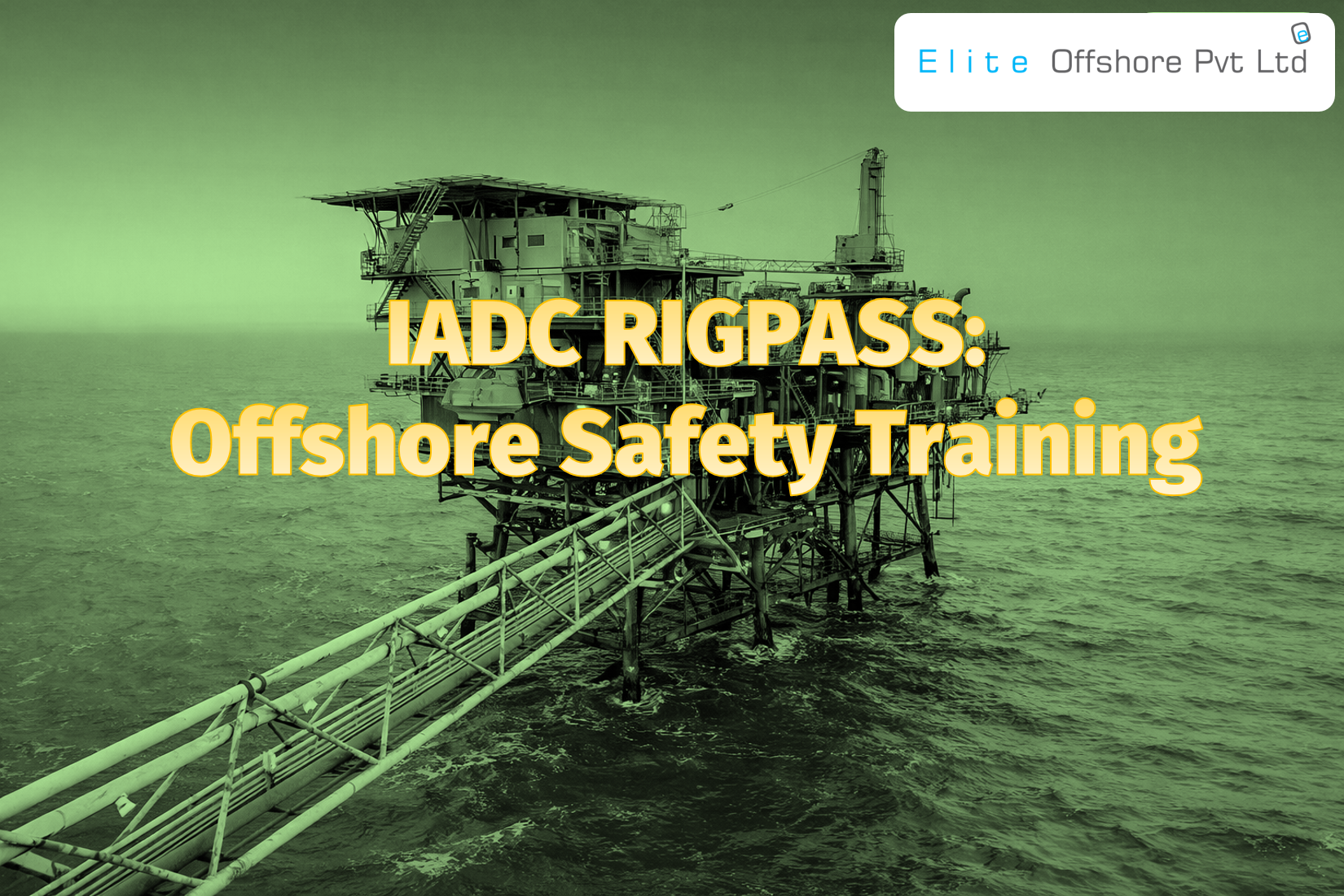
IADC RigPass: 8 Common Mistakes and Misconceptions
Every week, our team receives questions from candidates preparing to start their IADC RigPass training. Many of these questions involve common misunderstandings about what RigPass covers, how the programme is delivered, and what the certificate means. Understanding these points can help candidates choose the appropriate training and avoid assuming that one certificate covers requirements that may be separate. Here are some of the most common mistakes and misconceptions about IADC RigPass. Mistake 1: Assuming RigPass Is a Single, Fixed Course IADC RigPass is a standardized safety orientation programme for oil and gas operations, both onshore and offshore. The IADC accreditation system identifies the core elements of safety orientation programmes and provides a means of recognizing programmes that meet those requirements. Accredited training providers may develop and use their own training activities to customize the programme, while still meeting the applicable IADC requirements. RigPass programmes can also include applicable onshore/land or offshore endorsement content. This is why it is important to choose a training provider whose RigPass programme is accredited by IADC. IADC maintains a list of accredited RigPass providers and provides a facility for verifying IADC certificates. Mistake 2: Confusing RigPass with H2S Training or WellSharp RigPass is a general safety orientation programme designed to prepare personnel for oil and gas operating environments. It is not the same as H2S Awareness training or WellSharp. H2S training focuses specifically on the hazards and safe working practices associated with hydrogen sulphide, while WellSharp is an IADC well-control training and assessment programme. Depending on the employer, position and worksite, candidates may be required to complete additional training or certifications. Always check the specific requirements for the role rather than assuming that one certificate covers every requirement. Mistake 3: Thinking Onshore and Offshore Content Are the Same RigPass has a common safety orientation component, but applicable land/onshore and offshore endorsements address the different operating environments. Offshore operations can involve additional safety considerations associated with marine operations, helicopter transportation, personnel transfer and water-related hazards. Land/onshore operations have different considerations, including hazards associated with excavation, trenches, pits and ponds. If you are preparing for an offshore position, make sure you understand which endorsement your RigPass programme is qualified to issue. IADC-accredited providers may be qualified to issue the Land/Onshore Endorsement, Offshore Endorsement, or both, depending on their accreditation. Mistake 4: Believing eLearning Certification Is Less Valid Than Classroom Training The delivery method does not by itself determine whether a RigPass programme is accredited. What is important is that the programme is delivered under an applicable IADC accreditation. IADC's current list of accredited RigPass providers includes programmes delivered through eLearning, demonstrating that electronic delivery can be used by appropriately accredited programmes. However, candidates should always verify that the specific provider and programme are currently accredited and qualified to issue the applicable endorsement. Mistake 5: Assuming RigPass Certification Has an Expiry Date One of the most common misconceptions is that an IADC RigPass student certificate needs to be renewed after a fixed period. Important Fact According to IADC, student certificates do not expire. This is different from IADC RigPass instructor certificates, which expire after five years. Therefore, once a student successfully completes an accredited RigPass programme and receives an IADC Certificate of Completion, the student certificate does not have an expiry date or routine renewal requirement. Mistake 6: Assuming RigPass Guarantees a Job Completing RigPass does not guarantee employment. IADC describes RigPass as a standardized safety orientation programme intended to prepare personnel for oil and gas operating environments and to confirm that personnel have met basic safety-orientation requirements defined by safety and training professionals in the drilling industry. RigPass is therefore a safety orientation credential, not a job placement programme, employment guarantee or technical/trade qualification. Employers may have additional requirements based on the position, worksite and specific responsibilities. Mistake 7: Skipping Knowledge Assessment Preparation Because RigPass is a safety orientation programme, candidates should take the knowledge assessment seriously. IADC's accreditation procedures require completion of the HSE RigPass orientation to be documented through a knowledge assessment. The procedures specify a minimum passing score of 80%. If a trainee does not pass, one reassessment must be made available. If the trainee does not pass the reassessment, the trainee must attend the full course again and pass the assessment to achieve certification. Candidates should therefore review the course material carefully rather than simply clicking through the eLearning modules without understanding the content. Mistake 8: Not Verifying the Provider's Accreditation Status Not every course using the name "RigPass" should automatically be assumed to be an IADC-accredited programme. IADC maintains an official list of accredited RigPass training providers. It also provides a system for verifying IADC Certificates of Completion. Before enrolling, candidates should verify the provider's accreditation status and confirm that the provider is qualified to issue the endorsement required for their intended work environment. IADC RigPass Training at Elite Offshore Pvt. Ltd. Elite Offshore Pvt. Ltd. is listed by IADC as an Accredited Commercial Training Program and is qualified to issue the Onshore and Offshore Endorsement. IADC's current listing shows the programme as being delivered in English. Candidates completing an accredited IADC RigPass programme receive an IADC Certificate of Completion upon successfully meeting the applicable requirements. IADC states that student certificates do not expire. Interested in IADC RigPass training? Contact Elite Offshore Pvt. Ltd. for course information and enrolment details. Frequently Asked Questions Does IADC RigPass certification expire? No. According to IADC, student certificates do not expire. IADC RigPass instructor certificates are subject to a five-year expiry period, but this does not apply to student certificates. Is IADC RigPass eLearning valid? IADC-accredited RigPass programmes can be delivered through electronic learning where the programme and provider meet the applicable IADC accreditation requirements. IADC's current accredited-provider listing includes RigPass programmes delivered through eLearning. Candidates should verify the accreditation status of the specific provider and programme before enrolling. Is IADC RigPass the same as H2S or WellSharp training? No. RigPass is a standardized safety orientation programme, while H2S training and WellSharp address different training requirements. Depending on the job and employer, additional training may be required. Does RigPass guarantee a job on a rig? No. RigPass confirms completion of an accredited safety orientation programme; it does not guarantee employment. Employers may have additional training, certification, experience and competency requirements for specific positions. What is the passing score for the RigPass knowledge assessment? IADC's accreditation procedures specify a minimum passing score of 80% for the knowledge assessment. One reassessment must be made available if the trainee does not pass the initial assessment. Information source: IADC RigPass accreditation information, IADC RigPass curriculum and accreditation procedures. Requirements and accreditation status should always be verified against the current IADC information before enrolment. ``` .iadc-rigpass-blog { width: 100%; margin: 0; padding: 20px 24px 50px 0; font-family: "Poppins", "Segoe UI", Arial, sans-serif; color: #263238; line-height: 1.75; font-size: 16px; box-sizing: border-box; } .iadc-rigpass-blog * { box-sizing: border-box; } .iadc-rigpass-blog h1 { font-size: 36px; line-height: 1.25; font-weight: 700; color: #0b3d6e; margin: 0 0 18px; letter-spacing: -0.3px; text-align: left; } .iadc-rigpass-blog h2 { font-size: 25px; line-height: 1.35; font-weight: 700; color: #0b3d6e; margin: 45px 0 16px; padding-bottom: 8px; border-bottom: 2px solid #dbe8f3; text-align: left; } .iadc-rigpass-blog h3 { font-size: 20px; line-height: 1.45; font-weight: 700; color: #164f7d; margin: 30px 0 10px; text-align: left; } .iadc-rigpass-blog p { margin: 0 0 18px; text-align: left; } .iadc-rigpass-blog strong { color: #173f63; font-weight: 700; } .iadc-rigpass-blog .intro { font-size: 17px; line-height: 1.8; color: #455a64; margin-bottom: 30px; text-align: left; } .iadc-rigpass-blog .mistake { margin: 0 0 34px; padding: 24px 26px; background: #f7fafc; border-left: 4px solid #1976b9; border-radius: 0 8px 8px 0; } .iadc-rigpass-blog .mistake h3 { margin-top: 0; margin-bottom: 12px; } .iadc-rigpass-blog .key-fact { margin: 28px 0; padding: 22px 25px; background: #eef7fc; border: 1px solid #c9e2f1; border-radius: 8px; } .iadc-rigpass-blog .key-fact-title { font-size: 18px; font-weight: 700; color: #0b3d6e; margin-bottom: 8px; } .iadc-rigpass-blog .elite-section { margin-top: 45px; padding: 28px 30px; background: #f4f8fb; border: 1px solid #d7e5ef; border-radius: 10px; } .iadc-rigpass-blog .elite-section h2 { margin-top: 0; border-bottom: none; padding-bottom: 0; } .iadc-rigpass-blog .cta { margin-top: 25px; padding: 18px 22px; background: #0b3d6e; color: #ffffff; border-radius: 8px; font-size: 17px; line-height: 1.6; } .iadc-rigpass-blog .cta strong { color: #ffffff; } .iadc-rigpass-blog .faq { margin: 0 0 18px; padding: 20px 24px; border: 1px solid #dce6ed; border-radius: 8px; background: #ffffff; } .iadc-rigpass-blog .faq h3 { margin: 0 0 9px; font-size: 18px; color: #0b3d6e; } .iadc-rigpass-blog .faq p { margin-bottom: 0; } .iadc-rigpass-blog .source-note { margin-top: 35px; padding-top: 18px; border-top: 1px solid #dce6ed; font-size: 13px; line-height: 1.6; color: #687780; text-align: left; } .iadc-rigpass-blog a { color: #1269a8; text-decoration: underline; } .iadc-rigpass-blog a:hover { color: #0b3d6e; } @media (max-width: 768px) { .iadc-rigpass-blog { padding: 15px 18px 40px 0; font-size: 15.5px; line-height: 1.7; } .iadc-rigpass-blog h1 { font-size: 29px; } .iadc-rigpass-blog h2 { font-size: 22px; margin-top: 36px; } .iadc-rigpass-blog h3 { font-size: 18px; } .iadc-rigpass-blog .intro { font-size: 16px; } .iadc-rigpass-blog .mistake, .iadc-rigpass-blog .elite-section { padding: 20px; } .iadc-rigpass-blog .faq { padding: 18px 20px; } } @media (max-width: 480px) { .iadc-rigpass-blog { padding: 12px 15px 35px 0; font-size: 15px; } .iadc-rigpass-blog h1 { font-size: 25px; } .iadc-rigpass-blog h2 { font-size: 20px; } .iadc-rigpass-blog .mistake, .iadc-rigpass-blog .elite-section, .iadc-rigpass-blog .faq, .iadc-rigpass-blog .key-fact { padding: 17px; } }

Wed, 23 Sep 2026

All blogs