Published - 6 Hours Ago
Confined Space Entry Course: Practical Safety Training That Saves Lives

Confined Space Entry Course: Practical Safety Training That Saves Lives

Confined Space Entry Course: Practical Safety Training That Saves Lives - Key Insights & Details

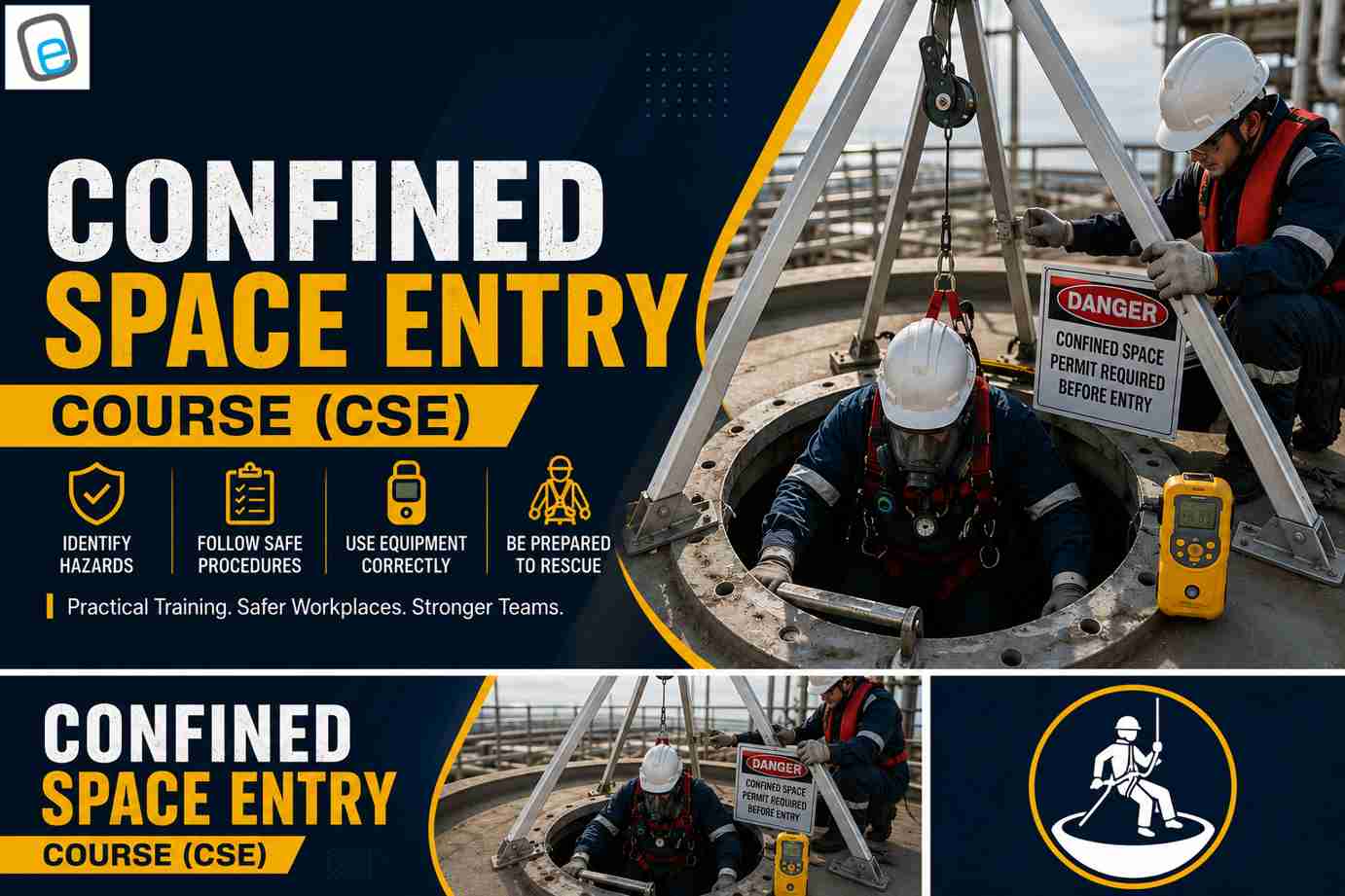
Every year, serious workplace incidents occur because confined spaces are underestimated. A storage tank, ballast tank, cargo hold, vessel compartment, pit, manhole, silo, or underground chamber may appear safe from the outside, but conditions inside can change within seconds. Oxygen levels can drop, toxic gases may accumulate, or flammable vapours can create life-threatening situations.

This is why confined space entry is one of the most critical safety competencies across offshore, marine, oil & gas, construction, manufacturing, and industrial operations.

At Elite Offshore Pvt Ltd, our Confined Space Entry Course (CSE) prepares workers, supervisors, and safety professionals with the knowledge and practical skills needed to work safely in confined environments while meeting internationally accepted safety practices.

Why Confined Space Entry Training Matters

Many workplace fatalities inside confined spaces happen because hazards are not identified before entry. In several cases, additional lives are lost when untrained personnel attempt a rescue.

A professional confined space entry course helps workers understand the hazards before stepping into a restricted area. It builds confidence in hazard recognition, safe work procedures, emergency preparedness, and proper equipment usage.

Whether you work on offshore platforms, ships, refineries, chemical plants, power stations, or manufacturing facilities, proper training significantly reduces operational risks and helps organisations maintain regulatory compliance.

Understanding Confined Spaces

A confined space is an area that:

  • Has limited or restricted means of entry or exit.

  • Is not designed for continuous occupancy.

  • May contain actual or potential hazards.

These spaces are generally classified as either a non permit confined space or a permit required confined space, depending on the hazards present.

Examples include:

  • Cargo tanks

  • Ballast tanks

  • Pressure vessels

  • Storage tanks

  • Sewers

  • Utility vaults

  • Pipelines

  • Process vessels

  • Boiler drums

  • Silos

  • Underground chambers

Before any confined space entrance is authorised, a complete hazard assessment must be carried out.

Common Hazards During Confined Space Entry

Even spaces that appear safe can quickly become dangerous. Workers must be prepared to identify hazards such as:

  • Oxygen deficiency or oxygen enrichment

  • Toxic gases, including hydrogen sulphide and carbon monoxide

  • Flammable gases and vapours

  • Engulfment hazards

  • Mechanical and electrical energy

  • Heat stress

  • Poor ventilation

  • Restricted escape routes

Understanding these hazards is the first step toward safe confined space entry.

The Importance of a Confined Space Entry Permit

One of the most important safety controls is the confined space entry permit.

A properly completed confined space permit confirms that:

  • Hazards have been identified.

  • Atmospheric testing has been completed.

  • Isolation and lockout procedures are in place.

  • Rescue arrangements are available.

  • Workers are medically fit and authorised.

  • Required PPE has been inspected.

  • Communication methods are established.

Without a valid confined space entry permit, work should never begin inside a permit-required confined space.

OSHA Confined Space Requirements

Many organisations follow OSHA confined space guidance to strengthen workplace safety.

The OSHA permit required confined space standard requires employers to:

  • Identify confined spaces.

  • Evaluate workplace hazards.

  • Train authorised entrants.

  • Issue permits before entry.

  • Perform atmospheric testing.

  • Maintain emergency response procedures.

  • Conduct rescue planning.

Meeting the OSHA requirements for confined space rescue is especially important because rescue attempts without planning can place additional workers at risk. Following these requirements helps organisations create safer work environments and maintain consistent safety standards.

Air Monitoring: The First Line of Defence

Hazardous atmospheres cannot always be seen or smelled.

This is why air monitors for confined space operations are essential before and during entry.

Gas detection equipment is used to monitor:

  • Oxygen concentration

  • Flammable gases

  • Hydrogen sulphide

  • Carbon monoxide

  • Other toxic contaminants

Continuous monitoring allows workers to leave the area immediately if atmospheric conditions become unsafe.

Confined Space Retrieval Systems and Rescue Equipment

A successful rescue depends on preparation long before an emergency occurs.

Essential confined space entry rescue equipment often includes:

  • Gas detectors

  • Full-body harnesses

  • Lifelines

  • Rescue tripods

  • Winches

  • Communication equipment

  • Escape breathing apparatus

  • Self-Contained Breathing Apparatus (SCBA)

A properly installed confined space retrieval system allows workers to be recovered without placing additional personnel in danger.

The Role of Signage

Proper warning signs help prevent unauthorised access.

Effective signage confined space systems clearly identify hazardous locations and remind workers that entry procedures must be followed.

Well-designed signage for confined space areas improves hazard awareness throughout industrial facilities and supports compliance with workplace safety programs.

What You Will Learn in Elite Offshore's Confined Space Entry Course

The Confined Space Entry Course at Elite Offshore Pvt Ltd combines classroom instruction with extensive practical exercises.

Participants learn:

  • Confined space identification

  • Hazard recognition

  • Risk assessment techniques

  • Permit to Work (PTW) procedures

  • Atmospheric testing

  • Gas detector operation

  • Ventilation methods

  • PPE selection and inspection

  • Safe entry and exit procedures

  • Emergency response awareness

  • Rescue planning fundamentals

  • Communication protocols

  • Practical confined space exercises

Training includes realistic scenarios that prepare participants for actual workplace conditions rather than theory alone. The course is delivered by experienced instructors with extensive offshore, marine, and industrial safety backgrounds.

Confined Space Entry and Rescue Training

A complete safety programme goes beyond safe entry.

Professional confined space entry and rescue training prepares participants to respond correctly during emergencies while protecting both entrants and rescue teams.

The programme introduces:

  • Rescue planning

  • Standby personnel responsibilities

  • Emergency communication

  • Safe retrieval techniques

  • Rescue equipment familiarisation

  • SCBA awareness

  • Practical rescue exercises

Workers also gain an understanding of confined space entry and rescue procedures that improve emergency preparedness across the workplace.

For organisations requiring advanced competency, a dedicated confined space entry and rescue course provides additional rescue-focused practical sessions.

Building an Effective Confined Space Program

Training is only one part of workplace safety.

A successful confined space program should include:

  • Hazard identification

  • Risk assessments

  • Permit systems

  • Equipment inspection schedules

  • Worker competency assessments

  • Emergency rescue plans

  • Regular refresher training

  • Incident reporting and review

When these elements work together, organisations improve compliance while reducing workplace incidents.

Why Choose Elite Offshore Pvt Ltd?

Elite Offshore Pvt Ltd has been delivering offshore, marine, oil & gas, and industrial safety training since 2015. The organisation focuses on practical learning that reflects real working environments rather than only classroom instruction.

Participants benefit from:

  • Experienced industry trainers

  • Practical hands-on exercises

  • Industry-relevant scenarios

  • Modern safety equipment

  • Structured learning modules

  • Training aligned with recognised international safety practices

The objective is simple—prepare every participant to return to the workplace with the confidence to recognise hazards, follow safe procedures, and contribute to a stronger safety culture.

Conclusion

Working inside confined spaces demands planning, competence, and discipline. Proper hazard identification, atmospheric testing, permit systems, rescue readiness, and continuous monitoring are essential for every entry operation.

Completing a professional confined space course gives workers the practical knowledge needed to perform their duties more safely while helping employers maintain operational compliance and protect their workforce.

If your organisation is committed to reducing workplace risks and strengthening safety standards, the Confined Space Entry Course from Elite Offshore Pvt Ltd provides practical, industry-focused training designed for today's offshore, marine, and industrial environments.

Created by

Elite Offshore Pvt Ltd

Elite Offshore Pvt Ltd, established 2015, headquartered in CBD Belapur, Navi Mumbai, is a renowned training institution specializing in safety and skill courses for the offshore and industrial sectors. With a commitment to excellence, Elite Offshore offers a wide range of courses designed to meet the specific needs of professionals working in challenging environments. These courses include BOSIET, HUET, HLO, HDA, OERTM, OERTL, and more, ensuring that individuals are equipped with the necessary knowledge and skills to excel in their roles. As a trusted name in the industry, Elite Offshore is known for its state-of-the-art facilities, experienced trainers, and adherence to international safety standards. Through their training programs, they aim to enhance safety, efficiency, and proficiency in offshore and industrial operations, contributing to the success and well-being of professionals and organizations alike. Learn more about Elite Offshore Pvt Ltd and their comprehensive training solutions at https://eliteoffshore.in. Elite Offshore Pvt Ltd was founded with a clear goal - to enhance safety standards and promote unmatched skills development in the offshore industry. Established in 2015, the institute quickly gained a reputation as a reliable partner for individuals and organizations seeking exceptional training programs. With a commitment to delivering top-quality training solutions, Elite Offshore has become a recognized name in providing complete safety and skill development programs for the industrial and offshore oil and gas sector. It's not just a training center but a hub of knowledge, safety, and professional growth.

Elite Offshore Pvt Ltd: Leading the Way in Safety and Skill Training 

Founded with a vision to revolutionize safety and skill training in the offshore and industrial sectors, Elite Offshore Pvt Ltd stands tall as a beacon of excellence in CBD Belapur, Navi Mumbai. Established in 2015, Elite Offshore has rapidly emerged as a trusted name, delivering top-notch courses and certifications to professionals across various industries.

Inception and Growth:

Elite Offshore Pvt Ltd was born in 2015 from a passion for ensuring the utmost safety and efficiency in offshore and industrial operations. The founders envisioned a training institution that would not only impart essential skills but also instill a culture of safety consciousness among professionals.

In the early days, Elite Offshore started its journey with a modest team of highly skilled trainers and a commitment to providing cutting-edge training facilities. The institution quickly gained recognition for its hands-on approach, practical training modules, and adherence to international safety standards.

Courses Offered:

One of the key pillars of Elite Offshore's success is its diverse range of courses catering to the specific needs of the offshore and industrial sectors. The institution offers a comprehensive suite of training programs, including:

1. Basic Offshore Safety Induction and Emergency Training (BOSIET): Equipping professionals with essential survival skills and emergency response training for offshore environments.

2. Helicopter Underwater Escape Training (HUET): Providing the knowledge and techniques needed to escape safely from a submerged helicopter.

3. Helideck Assistant (HLO): Training individuals in the safe and efficient management of helideck operations.

4. Hazardous Area Classification (HDA): Understanding the classification and management of hazardous areas in industrial settings.

5. Offshore Emergency Response Team Member (OERTM): Developing the skills required to be part of an emergency response team in offshore installations.

6. Offshore Emergency Response Team Leader (OERTL): Training individuals to lead and coordinate emergency response efforts in offshore environments.

7. Liberia approved OIM, Barge Supervisor, Ballast Control Operator, Maintenance Supervisor.

and many more. Visit
https://eliteoffshore.in for more details.

Excellence in Training:

What sets Elite Offshore apart is its unwavering commitment to excellence in training. The institution boasts state-of-the-art training facilities equipped with the latest technology and simulators. This allows participants to experience real-life scenarios in a controlled environment, enhancing their learning and preparedness.

Moreover, Elite Offshore's team of seasoned trainers brings a wealth of industry experience and expertise to the classroom. Their practical insights and hands-on approach ensure that participants not only grasp theoretical concepts but also develop the necessary skills to excel in their roles.

Industry Recognition and Achievements:

Over the years, Elite Offshore Pvt Ltd has garnered numerous accolades and certifications for its exceptional training standards. The institution is proud to be accredited by prestigious bodies such as IADC, Liberia Govt etc, ensuring that its courses meet the highest industry standards.

Elite Offshore has also forged strong partnerships with leading companies in the offshore and industrial sectors. These collaborations have enabled the institution to stay abreast of industry trends, emerging technologies, and evolving safety regulations.

Future Ambitions:

Looking ahead, Elite Offshore Pvt Ltd has ambitious plans to further expand its footprint in the realm of safety and skill training. The institution aims to:

1. Enhance Course Offerings: Continuously innovate and introduce new courses that address the evolving needs of the offshore and industrial sectors.

2. Global Expansion: Explore opportunities to establish training centers in key offshore hubs worldwide, catering to an international clientele.

3. Research and Development: Invest in research and development initiatives to develop advanced training methodologies and simulators.

4. Corporate Social Responsibility: Engage in meaningful CSR initiatives aimed at promoting safety awareness and skill development in local communities.

5. Industry Partnerships: Strengthen collaborations with industry leaders, academic institutions, and regulatory bodies to drive excellence in safety and skill training.

Conclusion:

In a world where safety and efficiency are paramount in offshore and industrial operations, Elite Offshore Pvt Ltd stands as a beacon of excellence. With its unwavering commitment to providing top-tier training, cutting-edge facilities, and a team of industry-leading trainers, the institution continues to shape the future of safety and skill development.

As Elite Offshore embarks on its journey towards greater heights, its mission remains clear: to empower professionals with the knowledge, skills, and confidence to navigate the challenges of the offshore and industrial sectors safely and effectively.

For more information about Elite Offshore Pvt Ltd and its range of courses, visit https://eliteoffshore.in or write to info@eliteoffshore.in or training@eliteoffshore.in.

View profile

Comments (0)

Search
Popular categories
Latest blogs
Confined Space Entry Course: Practical Safety Training That Saves Lives
Every year, serious workplace incidents occur because confined spaces are underestimated. A storage tank, ballast tank, cargo hold, vessel compartment, pit, manhole, silo, or underground chamber may appear safe from the outside, but conditions inside can change within seconds. Oxygen levels can drop, toxic gases may accumulate, or flammable vapours can create life-threatening situations.This is why confined space entry is one of the most critical safety competencies across offshore, marine, oil & gas, construction, manufacturing, and industrial operations.At Elite Offshore Pvt Ltd, our Confined Space Entry Course (CSE) prepares workers, supervisors, and safety professionals with the knowledge and practical skills needed to work safely in confined environments while meeting internationally accepted safety practices.Why Confined Space Entry Training MattersMany workplace fatalities inside confined spaces happen because hazards are not identified before entry. In several cases, additional lives are lost when untrained personnel attempt a rescue.A professional confined space entry course helps workers understand the hazards before stepping into a restricted area. It builds confidence in hazard recognition, safe work procedures, emergency preparedness, and proper equipment usage.Whether you work on offshore platforms, ships, refineries, chemical plants, power stations, or manufacturing facilities, proper training significantly reduces operational risks and helps organisations maintain regulatory compliance.Understanding Confined SpacesA confined space is an area that:Has limited or restricted means of entry or exit.Is not designed for continuous occupancy.May contain actual or potential hazards.These spaces are generally classified as either a non permit confined space or a permit required confined space, depending on the hazards present.Examples include:Cargo tanksBallast tanksPressure vesselsStorage tanksSewersUtility vaultsPipelinesProcess vesselsBoiler drumsSilosUnderground chambersBefore any confined space entrance is authorised, a complete hazard assessment must be carried out.Common Hazards During Confined Space EntryEven spaces that appear safe can quickly become dangerous. Workers must be prepared to identify hazards such as:Oxygen deficiency or oxygen enrichmentToxic gases, including hydrogen sulphide and carbon monoxideFlammable gases and vapoursEngulfment hazardsMechanical and electrical energyHeat stressPoor ventilationRestricted escape routesUnderstanding these hazards is the first step toward safe confined space entry.The Importance of a Confined Space Entry PermitOne of the most important safety controls is the confined space entry permit.A properly completed confined space permit confirms that:Hazards have been identified.Atmospheric testing has been completed.Isolation and lockout procedures are in place.Rescue arrangements are available.Workers are medically fit and authorised.Required PPE has been inspected.Communication methods are established.Without a valid confined space entry permit, work should never begin inside a permit-required confined space.OSHA Confined Space RequirementsMany organisations follow OSHA confined space guidance to strengthen workplace safety.The OSHA permit required confined space standard requires employers to:Identify confined spaces.Evaluate workplace hazards.Train authorised entrants.Issue permits before entry.Perform atmospheric testing.Maintain emergency response procedures.Conduct rescue planning.Meeting the OSHA requirements for confined space rescue is especially important because rescue attempts without planning can place additional workers at risk. Following these requirements helps organisations create safer work environments and maintain consistent safety standards.Air Monitoring: The First Line of DefenceHazardous atmospheres cannot always be seen or smelled.This is why air monitors for confined space operations are essential before and during entry.Gas detection equipment is used to monitor:Oxygen concentrationFlammable gasesHydrogen sulphideCarbon monoxideOther toxic contaminantsContinuous monitoring allows workers to leave the area immediately if atmospheric conditions become unsafe.Confined Space Retrieval Systems and Rescue EquipmentA successful rescue depends on preparation long before an emergency occurs.Essential confined space entry rescue equipment often includes:Gas detectorsFull-body harnessesLifelinesRescue tripodsWinchesCommunication equipmentEscape breathing apparatusSelf-Contained Breathing Apparatus (SCBA)A properly installed confined space retrieval system allows workers to be recovered without placing additional personnel in danger.The Role of SignageProper warning signs help prevent unauthorised access.Effective signage confined space systems clearly identify hazardous locations and remind workers that entry procedures must be followed.Well-designed signage for confined space areas improves hazard awareness throughout industrial facilities and supports compliance with workplace safety programs.What You Will Learn in Elite Offshore's Confined Space Entry CourseThe Confined Space Entry Course at Elite Offshore Pvt Ltd combines classroom instruction with extensive practical exercises.Participants learn:Confined space identificationHazard recognitionRisk assessment techniquesPermit to Work (PTW) proceduresAtmospheric testingGas detector operationVentilation methodsPPE selection and inspectionSafe entry and exit proceduresEmergency response awarenessRescue planning fundamentalsCommunication protocolsPractical confined space exercisesTraining includes realistic scenarios that prepare participants for actual workplace conditions rather than theory alone. The course is delivered by experienced instructors with extensive offshore, marine, and industrial safety backgrounds.Confined Space Entry and Rescue TrainingA complete safety programme goes beyond safe entry.Professional confined space entry and rescue training prepares participants to respond correctly during emergencies while protecting both entrants and rescue teams.The programme introduces:Rescue planningStandby personnel responsibilitiesEmergency communicationSafe retrieval techniquesRescue equipment familiarisationSCBA awarenessPractical rescue exercisesWorkers also gain an understanding of confined space entry and rescue procedures that improve emergency preparedness across the workplace.For organisations requiring advanced competency, a dedicated confined space entry and rescue course provides additional rescue-focused practical sessions.Building an Effective Confined Space ProgramTraining is only one part of workplace safety.A successful confined space program should include:Hazard identificationRisk assessmentsPermit systemsEquipment inspection schedulesWorker competency assessmentsEmergency rescue plansRegular refresher trainingIncident reporting and reviewWhen these elements work together, organisations improve compliance while reducing workplace incidents.Why Choose Elite Offshore Pvt Ltd?Elite Offshore Pvt Ltd has been delivering offshore, marine, oil & gas, and industrial safety training since 2015. The organisation focuses on practical learning that reflects real working environments rather than only classroom instruction.Participants benefit from:Experienced industry trainersPractical hands-on exercisesIndustry-relevant scenariosModern safety equipmentStructured learning modulesTraining aligned with recognised international safety practicesThe objective is simple—prepare every participant to return to the workplace with the confidence to recognise hazards, follow safe procedures, and contribute to a stronger safety culture.ConclusionWorking inside confined spaces demands planning, competence, and discipline. Proper hazard identification, atmospheric testing, permit systems, rescue readiness, and continuous monitoring are essential for every entry operation.Completing a professional confined space course gives workers the practical knowledge needed to perform their duties more safely while helping employers maintain operational compliance and protect their workforce.If your organisation is committed to reducing workplace risks and strengthening safety standards, the Confined Space Entry Course from Elite Offshore Pvt Ltd provides practical, industry-focused training designed for today's offshore, marine, and industrial environments.

6 Hours Ago

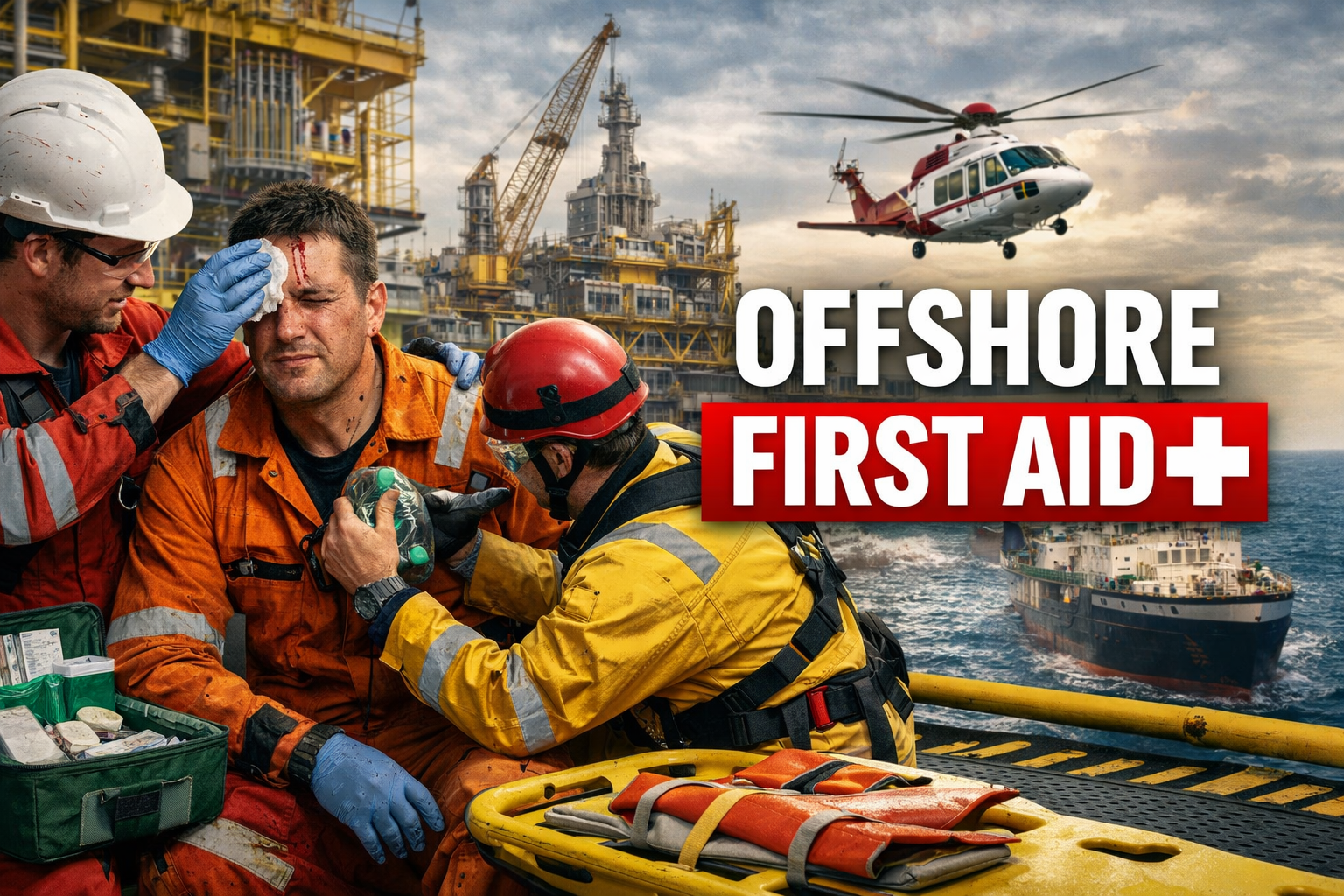
7 First Aid Mistakes That Turn a Minor Offshore Injury Into a Fatality
The Injury Itself Rarely Kills. What Happens Next Often Does.Talk to enough offshore medics and safety officers, and you'll hear the same thing: most fatalities and permanent injuries on rigs, vessels, and industrial sites aren't caused by the initial incident. They're caused by what the people around the victim did — or didn't do — in the first five minutes.A cut doesn't kill a man. Untreated bleeding does. A fall doesn't paralyze someone. Moving them wrong afterward can.This isn't a checklist post. This is what actually goes wrong on real sites, based on documented incident patterns in offshore and industrial settings — and why "we'll wait for the medic" is sometimes the most dangerous sentence in the room.Mistake #1: Moving an Injured Person ImmediatelyThe instinct is to help someone up, get them to a chair, get them "somewhere comfortable." On a rig or vessel, this instinct has paralyzed people with spinal injuries that would otherwise have been survivable. If there's any chance of a back, neck, or head injury from a fall or impact, the correct move is often no move at all until it's assessed properly.Mistake #2: Applying a Tourniquet — Or Not Applying One — At the Wrong TimeOffshore crews are often taught outdated ideas about tourniquets: that they're a last resort, that they'll cost someone a limb. Modern protocol is the opposite — for severe limb bleeding, a tourniquet applied early saves lives, and the "will cost a limb" myth has caused fatal hesitation in real cases. Equally, using one for a wound that just needs direct pressure can cause unnecessary tissue damage.Mistake #3: Giving Water or Food to Someone in ShockIt feels like comfort. It's often the wrong call. A person going into shock can lose the ability to swallow safely, and food or water can lead to choking or aspiration — a completely preventable complication stacked on top of the original injury.Mistake #4: Removing a Large Embedded ObjectNails, metal shards, tools — if something is impaled and still in the body, pulling it out is frequently the instinct and frequently wrong. In many cases, the object itself is partially controlling blood loss. Untrained removal can trigger catastrophic bleeding that wasn't happening a moment before.Mistake #5: Misreading a Heart Attack as Heat Exhaustion (Or Vice Versa)On offshore and industrial sites, heat stress is common enough that chest tightness, sweating, and nausea get written off as "just the heat." Crews have lost critical time treating a cardiac event as dehydration. The symptoms can look similar; the response can't afford to guess.Mistake #6: Freezing Because "Someone More Qualified Will Handle It"This is the most common failure, and the least discussed. On a crew of twenty, everyone assumes someone else knows what to do — so nobody moves for the first crucial minute. In cardiac arrest, survival odds drop by roughly 7–10% for every minute without CPR. That minute of hesitation is often the only difference that matters.Mistake #7: Not Knowing Where the AED Is — Or Assuming It's Not Needed YetMany worksites have an AED sitting in a cabinet that's rarely checked and rarely practiced with. In a cardiac event, people hesitate to use it because they've never actually held one before. An AED talks you through every step — the barrier isn't skill, it's unfamiliarity.Why This Keeps HappeningNone of this is about crews being careless. It's about the gap between knowing first aid exists and being trained to act on it under real pressure, with adrenaline running and someone's life actually on the line. Reading a poster in the break room is not the same as having done chest compressions on a mannequin, applied a tourniquet under a trainer's watch, or practiced the exact seconds-long decision of whether to move someone or not.That gap is exactly what proper, hands-on Basic First Aid training closes.What Changes With Real TrainingCrews that go through structured, practical Basic First Aid training don't just learn steps — they build the reflex to act instead of freeze, and the judgment to make the right call instead of the intuitive one. Elite Offshore's Basic First Aid course is built specifically around these real-world failure points, with hands-on practice — not just theory — so your team doesn't hesitate when it counts.Get in touch to bring this training onsite, online, or at our facility. Elite Offshore Pvt Ltd — Offshore, Marine & Industrial Safety Training.

2 Days Ago

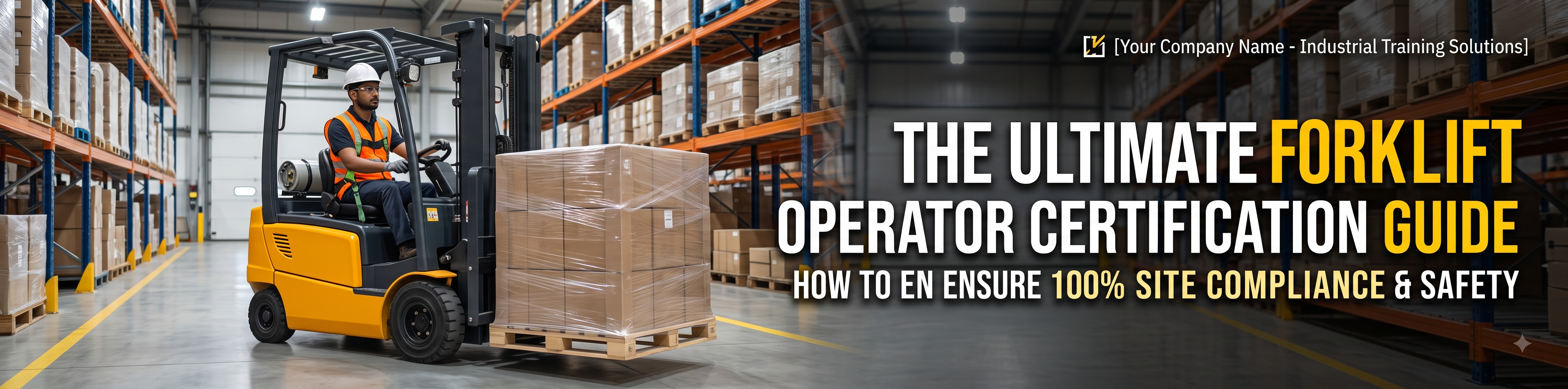
The Ultimate Forklift Operator Certification Guide: How to Ensure 100% Site Compliance
Every busy logistics hub, manufacturing yard, and offshore supply base relies heavily on material handling equipment. But behind every efficient fleet is a major legal and physical liability: the operator.According to global safety data, forklift-related incidents account for tens of thousands of serious workplace injuries annually. The majority of these accidents are entirely preventable and are directly linked to untrained or poorly evaluated drivers. Whether you are a warehouse manager trying to protect your business from massive regulatory penalties or an individual looking to upgrade your resume, understanding proper Forklift Operator Certification is critical. The Legal Framework: What Regulatory Bodies Actually RequireMany organizations mistakenly believe that a quick theoretical or online overview is enough to grant a valid forklift operator card. It is not. Under international regulatory frameworks, including OSHA 29 CFR 1910.178 (Powered Industrial Trucks), compliant training must follow a strict three-pronged approach: Formal Instruction: Classroom-style or multimedia delivery covering truck mechanics, vehicle capacity, and structural stability factors. Practical Training: Hands-on demonstrations and supervised training exercises performed directly on the type of machine the operator will be using. Workplace Evaluation: An on-site practical assessment to verify the operator can safely navigate the specific physical hazards of your actual workspace. ⚠️ Important Compliance Note: A certification is equipment-specific. An employee certified to operate a standard sit-down counterbalance forklift is not legally certified to operate a stand-up reach truck or a heavy-duty telehandler without receiving separate practical training and validation. Core Topics Covered in a Professional SyllabusTo successfully mitigate risks, a professional training curriculum cannot cut corners. Standard-compliant training program details include: 1. Mechanical Knowledge & The Stability TriangleUnlike cars, forklifts utilize a three-point suspension system (the two front tires and the center of the rear axle). This creates the Stability Triangle. If an operator carries a load that is too heavy, handles an elevated load improperly, or turns quickly on a ramp, the center of gravity shifts outside this triangle, causing an immediate vehicle tip-over. 2. Daily Pre-Operational InspectionsOperators are required by law to conduct visual and mechanical checks before every single shift. This inspection covers structural components like fork pins, fluid levels, tire pressures, and safety systems including brakes, horn, steering, and lights. Any defective truck must be locked out and removed from service immediately. 3. Navigating Workplace SpecificsDriving inside a closed warehouse requires specialized maneuvering skills. Training ensures operators understand floor load restrictions, overhead clearance limitations, narrow aisle stacking practices, and the golden rules for travelling on sloped ramps. Why Choose Our Certified Forklift Training Program?At Elite Offshore Pvt ltd, we don't just provide check-box certifications. We build elite, safe, and highly competent machine operators. Our comprehensive industrial training solutions deliver massive benefits to your business:100% Compliance Alignment: Our courses perfectly match the regulatory structure of international safety standards, keeping your business legally insulated. State-of-the-Art Practical Yard: Trainees get dedicated, extensive hands-on seat time on modern, well-maintained machinery under the direct supervision of qualified senior instructors. Tailored Corporate Solutions: We can bring our evaluation team directly to your site to perform the mandatory workplace assessments tailored to your specific logistical layout. Robust Verification & Documentation: Upon passing, your business receives instant access to transparent, audit-ready training logs, compliance certificates, and wallet cards. Book Your Training Batch TodayDon’t wait for a near-miss or a costly regulatory audit to correct your site safety standards. Invest in professional technical training that preserves your equipment, protects your cargo, and saves lives. ???? [Click Here to Book Your Forklift Operator Training Course]Have a large team? Contact our corporate desk directly on 914 80-9747-2277  to receive customized group training quotes and schedules tailored to your operations.

3 Days Ago

All blogs