Published - 7 Days Ago
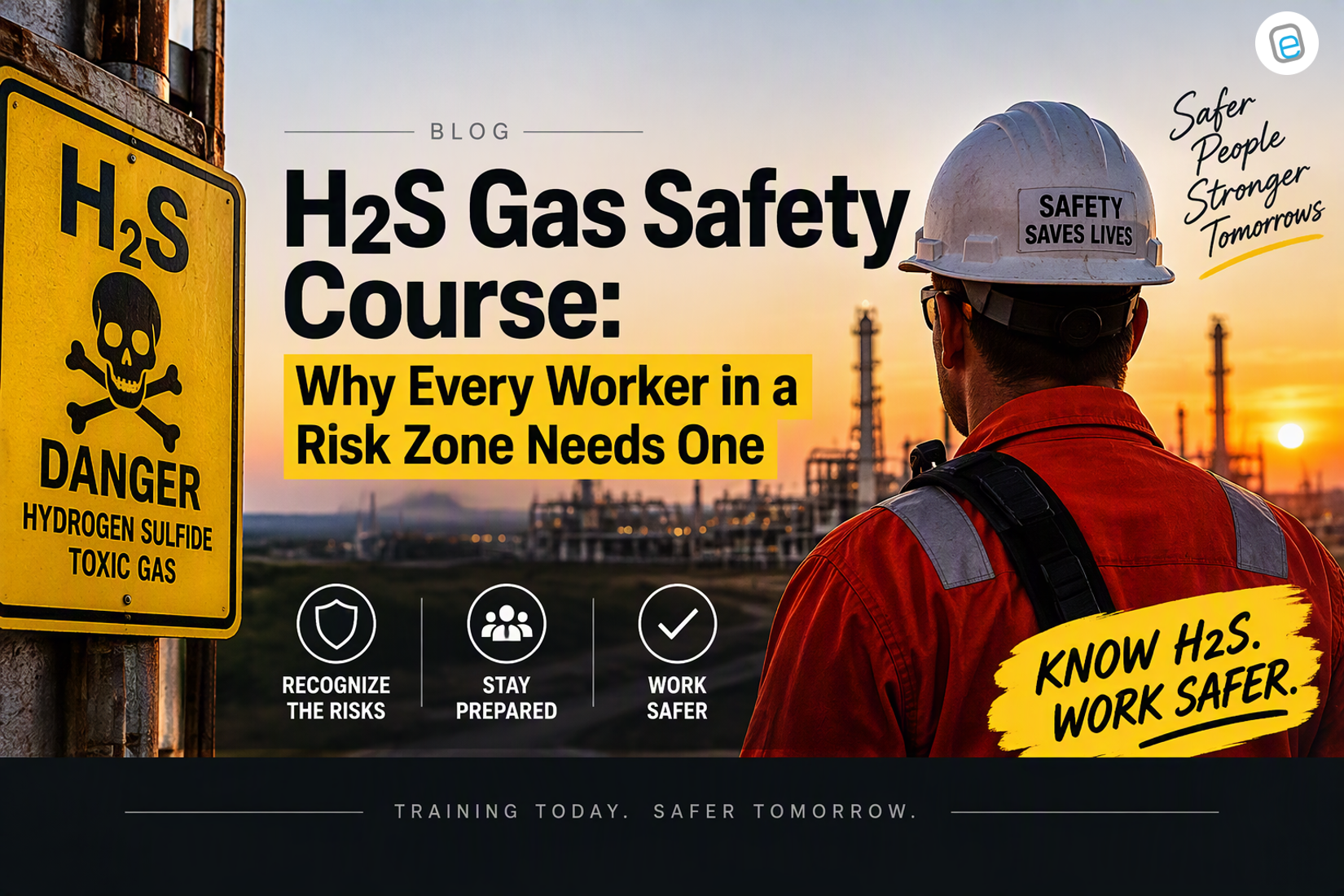
H2S Detection and Hydrogen Sulphide Safety: What Every Worker Should Know
H2S Detection and Hydrogen Sulphide Safety: What Every Worker Should Know - Key Insights & Details
Understanding H2S gas hazards, detection devices, respiratory protection and emergency response in high-risk workplaces
In workplaces where hydrogen sulphide may be present, recognising a hazard early can make a critical difference. Workers in oil and gas facilities, offshore installations, refineries and wastewater treatment plants may encounter this dangerous gas during routine operations, maintenance work or unexpected equipment failures. The risk is not always visible, and relying on smell to identify its presence can be extremely dangerous.
This is why H2S safety training is an important part of workplace preparation. Workers need to understand the properties of the gas, know how to use detection equipment, recognise alarm signals and follow the correct emergency procedures.
A well-structured Basic H2S Course (Hydrogen Sulphide Safety) helps participants build this knowledge before they enter an environment where exposure could occur. It also explains the importance of respiratory protection, personal protective equipment (PPE), and safe evacuation practices.
What Is Hydrogen Sulphide (H2S)?
Hydrogen sulphide, commonly written as H2S, is a colourless, flammable and highly toxic gas. It can occur naturally in crude oil and natural gas operations and may also be produced by the decomposition of organic material in oxygen-deficient environments.
Workers may encounter H2S in several industries, including:
Offshore oil and gas installations
Drilling operations and well-servicing activities
Petroleum refineries and petrochemical plants
Wastewater treatment facilities
Sewers, drainage systems and certain industrial processing areas
Understanding hydrogen sulphide (H2S) is not limited to knowing its chemical formula. Workers must understand how the gas behaves, where it may accumulate and how quickly an unsafe atmosphere can develop.
H2S is denser than air under ordinary conditions and may accumulate in low-lying or poorly ventilated areas. However, airflow, temperature, turbulence, and site conditions can affect how the gas spreads. Workers should never assume that a particular location is safe simply because it is open or well above ground level.
Understanding H2S Properties and Gas Hazards
Knowledge of H2S properties helps workers recognise why this gas requires careful monitoring and strict safety controls.
One of the most dangerous misconceptions is that the smell of rotten eggs can be used to identify H2S. Although the gas may have this smell at low concentrations, exposure can impair the sense of smell. At dangerous concentrations, a worker may no longer be able to detect the odour reliably.
Other important characteristics include its toxicity, flammability and ability to create an immediately dangerous atmosphere.
Health effects of H2S exposure
The effects of exposure depend on the concentration, duration and individual circumstances. Exposure may cause:
Irritation of the eyes and respiratory tract
Headaches, dizziness and nausea
Breathing difficulties and confusion
Loss of consciousness
Respiratory failure and death in severe cases
High concentrations can cause rapid incapacitation, leaving a worker unable to escape without assistance from a properly equipped rescue team.
For this reason, H2S gas hazards must be controlled through risk assessment, suitable engineering controls, gas monitoring, appropriate respiratory protection and emergency preparedness. Smell must never be treated as a safety instrument.
Why H2S Detection Is Essential
H2S detection is one of the most important elements of workplace gas safety. Since the gas cannot be reliably identified by sight or smell, suitable detection equipment provides an essential warning when dangerous conditions develop.
Depending on the workplace and risk assessment, monitoring arrangements may include personal gas detectors, portable instruments and fixed gas detection systems.
Common H2S detection devices
Personal H2S detectors: These are worn by workers to monitor the atmosphere around them. Depending on the model, they may provide audible, visual and vibrating alarms when configured alarm thresholds are reached.
Portable gas monitors: These instruments can be used for workplace checks and atmospheric monitoring in accordance with site procedures. Workers must be trained in their correct use and limitations.
Fixed gas detection systems: Installed in selected areas, these systems can monitor for hazardous gas and activate alarms or other safety responses as configured.
Using H2S detection devices correctly involves more than switching them on. Workers should understand the instrument's operating instructions, alarm settings, limitations, and maintenance requirements.
Pre-use equipment checks
Pre-use equipment checks are an essential part of safe working practices. Before using a personal gas detector, workers should follow the manufacturer's instructions and site procedures to verify that the instrument is suitable for use.
Checks may include confirming the battery condition, sensor status, calibration status where applicable, alarm function, and completion of any required bump test or functional test.
A detector that is damaged, overdue for required testing or showing a fault should not be relied upon. Workers must report the issue and follow site procedures before entering a potentially hazardous area.
Occupational Exposure Limits and Workplace Monitoring
Occupational exposure limits (OELs) are established by relevant authorities or organisations to guide the control of workplace exposure. These limits may differ by jurisdiction and standard, and some apply to short-term exposure while others address longer exposure periods.
Workers should understand the exposure limits specified by their employer, the applicable regulations and the site's H2S safety procedures.
Gas detector alarms and exposure limits serve different purposes. A detector's alarm setting must be appropriate to the hazard assessment and applicable requirements; it should not be assumed to be interchangeable with an occupational exposure limit.
A reading below a particular limit also does not automatically mean that every activity is safe. The atmosphere, task, equipment, ventilation and potential for conditions to change must all be considered.
Personal Protective Equipment and Respiratory Protection
Personal protective equipment (PPE) forms part of a wider safety system, but ordinary workplace PPE does not make an H2S atmosphere safe.
Depending on the assessed risks, workers may require suitable respiratory protection, protective clothing, eye protection and other equipment specified by the employer's procedures.
Respiratory protection is particularly important when working in environments where H2S could be present. The equipment selected must be suitable for the concentration, atmosphere, task and applicable respiratory protection programme.
Escape breathing apparatus and SCBA
An escape breathing apparatus (EBA) is intended to provide breathing air for escape in accordance with the equipment's design and approved use. It must not be treated as equipment for entering a hazardous atmosphere or carrying out a rescue unless specifically designed and approved for that purpose.
A self-contained breathing apparatus (SCBA) supplies breathing air from a carried cylinder and may be used by trained personnel for authorised operations or emergency response, subject to the equipment's capabilities and site procedures.
Escape sets, SCBA equipment and cascade breathing systems have different functions. Workers must understand the limitations of each system and receive appropriate training before use.
Equipment checks, correct fitting, adequate air supply, proper maintenance, and familiarity with emergency procedures are all essential. The correct equipment must be selected by competent personnel based on the actual hazard.
H2S Alarms and Emergency Response
An H2S alarm must be treated seriously. Workers should know the meaning of the site's alarm signals and the actions required for their assigned work area.
A typical H2S emergency response involves the following principles:
Recognise the alarm. Do not ignore a gas detector warning or assume that it is a false alarm without following the approved procedure.
Stop work safely. If it is safe to do so, stop the task and avoid actions that could create additional hazards.
Follow the designated escape route. Move towards the specified safe area or muster point in accordance with site procedures. Wind direction and designated escape arrangements may influence the route.
Raise the alarm and communicate. Inform the appropriate control room, supervisor or emergency response team using the established communication system.
Do not re-enter the affected area. Entry must only occur when authorised under the site's procedures and supported by the required atmospheric assessment, equipment and competent personnel.
A worker must never rush into an H2S-affected area to rescue a colleague without suitable training, equipment and authorisation. Secondary casualties can occur when unprotected people attempt a rescue.
First aid and rescue arrangements should be carried out by trained personnel in accordance with the emergency plan. A suspected exposure requires urgent medical assessment, even if the affected person appears to recover.
The Importance of H2S Safety Training in the Oil and Gas Industry
In the oil and gas industry, workers may perform tasks in locations where gas conditions can change quickly. Training helps personnel understand the risks before beginning work and reinforces the importance of following established procedures.
An H2S awareness course can introduce the basic properties of the gas, its health effects and the precautions workers should follow. More comprehensive H2S safety training may also include detector operation, alarm response, equipment checks, escape procedures and practical exercises, depending on the course scope.
Workers should receive training appropriate to their roles, the site hazards and the equipment they are expected to use. Employers must also ensure that training is supported by suitable supervision, risk assessments, emergency plans and equipment maintenance.
Personnel comparing an H2S course with an H2S OPITO programme should check the specific course approval, awarding organisation and recognition requirements. The term “H2S OPITO” should not be taken as proof that a course is OPITO-approved; this must be verified against the particular programme and its official listing.
Similarly, an H2S gas certification may be required by an employer or client, but acceptance depends on the relevant workplace and industry requirements. Candidates should confirm which training and certificate their employer expects before enrolling.
Basic H2S Course at Elite Offshore Pvt Ltd
Elite Offshore Pvt Ltd provides offshore, marine and industrial safety and skills training for personnel working in demanding environments. Its Basic H2S Course (Hydrogen Sulphide Safety) is intended to help participants understand the hazards associated with hydrogen sulphide and the precautions needed when working in areas where the gas may be present.
The course covers key subjects such as:
H2S formation, properties and potential health effects
Gas monitoring and H2S detection devices
Parts-per-million (ppm) readings and occupational exposure limits
Personal protective equipment and respiratory protection
Pre-use checks for personal detectors and escape breathing apparatus
Correct use of relevant breathing and escape equipment within the training scope
Emergency alarms, evacuation and response procedures
The training combines theoretical instruction with practical learning activities appropriate to the course scope. This helps participants understand how to recognise hazards, check equipment and respond in accordance with established safety procedures.
The course is relevant to personnel in offshore operations, oil and gas facilities, refineries, petrochemical plants, and wastewater treatment environments where H2S may be a concern.
The listed course details specify an eight-hour duration, online and offline delivery options, and certificate validity of two years. Candidates should review the current course page for the latest details and any requirements relevant to their intended employment.
View the course details: Basic H2S Course (Hydrogen Sulphide Safety) – Elite Offshore Pvt Ltd
Building Safer Working Habits Around H2S
H2S safety depends on preparation, reliable monitoring and the willingness to follow established procedures, even when a task appears routine. A gas detector must be used correctly, respiratory protection must be suitable for the hazard, and workers must understand what to do when an alarm sounds.
Good training helps turn these requirements into familiar working practices. It also reinforces an important principle: no job should take priority over personal safety or the safety of the people working nearby.
For workers whose responsibilities may expose them to hydrogen sulphide, the right training is an important step towards recognising hazards and responding appropriately. Reviewing the Basic H2S Course (Hydrogen Sulphide Safety) offered by Elite Offshore Pvt Ltd can help candidates understand the course content and decide whether it meets their training needs.
Safety note: This article provides general educational information and does not replace site-specific risk assessments, applicable regulations, equipment instructions or approved emergency procedures.
Created by

Elite Offshore Pvt Ltd
Elite Offshore Pvt Ltd, established 2015, headquartered in CBD Belapur, Navi Mumbai, is a renowned training institution specializing in safety and skill courses for the offshore and industrial sectors. With a commitment to excellence, Elite Offshore offers a wide range of courses designed to meet the specific needs of professionals working in challenging environments. These courses include BOSIET, HUET, HLO, HDA, OERTM, OERTL, and more, ensuring that individuals are equipped with the necessary knowledge and skills to excel in their roles. As a trusted name in the industry, Elite Offshore is known for its state-of-the-art facilities, experienced trainers, and adherence to international safety standards. Through their training programs, they aim to enhance safety, efficiency, and proficiency in offshore and industrial operations, contributing to the success and well-being of professionals and organizations alike. Learn more about Elite Offshore Pvt Ltd and their comprehensive training solutions at https://eliteoffshore.in. Elite Offshore Pvt Ltd was founded with a clear goal - to enhance safety standards and promote unmatched skills development in the offshore industry. Established in 2015, the institute quickly gained a reputation as a reliable partner for individuals and organizations seeking exceptional training programs. With a commitment to delivering top-quality training solutions, Elite Offshore has become a recognized name in providing complete safety and skill development programs for the industrial and offshore oil and gas sector. It's not just a training center but a hub of knowledge, safety, and professional growth.
Elite Offshore Pvt Ltd: Leading the Way in Safety and Skill Training
Founded with a vision to revolutionize safety and skill training in the offshore and industrial sectors, Elite Offshore Pvt Ltd stands tall as a beacon of excellence in CBD Belapur, Navi Mumbai. Established in 2015, Elite Offshore has rapidly emerged as a trusted name, delivering top-notch courses and certifications to professionals across various industries.
Inception and Growth:
Elite Offshore Pvt Ltd was born in 2015 from a passion for ensuring the utmost safety and efficiency in offshore and industrial operations. The founders envisioned a training institution that would not only impart essential skills but also instill a culture of safety consciousness among professionals.
In the early days, Elite Offshore started its journey with a modest team of highly skilled trainers and a commitment to providing cutting-edge training facilities. The institution quickly gained recognition for its hands-on approach, practical training modules, and adherence to international safety standards.
Courses Offered:
One of the key pillars of Elite Offshore's success is its diverse range of courses catering to the specific needs of the offshore and industrial sectors. The institution offers a comprehensive suite of training programs, including:
1. Basic Offshore Safety Induction and Emergency Training (BOSIET): Equipping professionals with essential survival skills and emergency response training for offshore environments.
2. Helicopter Underwater Escape Training (HUET): Providing the knowledge and techniques needed to escape safely from a submerged helicopter.
3. Helideck Assistant (HLO): Training individuals in the safe and efficient management of helideck operations.
4. Hazardous Area Classification (HDA): Understanding the classification and management of hazardous areas in industrial settings.
5. Offshore Emergency Response Team Member (OERTM): Developing the skills required to be part of an emergency response team in offshore installations.
6. Offshore Emergency Response Team Leader (OERTL): Training individuals to lead and coordinate emergency response efforts in offshore environments.
7. Liberia approved OIM, Barge Supervisor, Ballast Control Operator, Maintenance Supervisor.
and many more. Visit https://eliteoffshore.in for more details.
Excellence in Training:
What sets Elite Offshore apart is its unwavering commitment to excellence in training. The institution boasts state-of-the-art training facilities equipped with the latest technology and simulators. This allows participants to experience real-life scenarios in a controlled environment, enhancing their learning and preparedness.
Moreover, Elite Offshore's team of seasoned trainers brings a wealth of industry experience and expertise to the classroom. Their practical insights and hands-on approach ensure that participants not only grasp theoretical concepts but also develop the necessary skills to excel in their roles.
Industry Recognition and Achievements:
Over the years, Elite Offshore Pvt Ltd has garnered numerous accolades and certifications for its exceptional training standards. The institution is proud to be accredited by prestigious bodies such as IADC, Liberia Govt etc, ensuring that its courses meet the highest industry standards.
Elite Offshore has also forged strong partnerships with leading companies in the offshore and industrial sectors. These collaborations have enabled the institution to stay abreast of industry trends, emerging technologies, and evolving safety regulations.
Future Ambitions:
Looking ahead, Elite Offshore Pvt Ltd has ambitious plans to further expand its footprint in the realm of safety and skill training. The institution aims to:
1. Enhance Course Offerings: Continuously innovate and introduce new courses that address the evolving needs of the offshore and industrial sectors.
2. Global Expansion: Explore opportunities to establish training centers in key offshore hubs worldwide, catering to an international clientele.
3. Research and Development: Invest in research and development initiatives to develop advanced training methodologies and simulators.
4. Corporate Social Responsibility: Engage in meaningful CSR initiatives aimed at promoting safety awareness and skill development in local communities.
5. Industry Partnerships: Strengthen collaborations with industry leaders, academic institutions, and regulatory bodies to drive excellence in safety and skill training.
Conclusion:
In a world where safety and efficiency are paramount in offshore and industrial operations, Elite Offshore Pvt Ltd stands as a beacon of excellence. With its unwavering commitment to providing top-tier training, cutting-edge facilities, and a team of industry-leading trainers, the institution continues to shape the future of safety and skill development.
As Elite Offshore embarks on its journey towards greater heights, its mission remains clear: to empower professionals with the knowledge, skills, and confidence to navigate the challenges of the offshore and industrial sectors safely and effectively.
For more information about Elite Offshore Pvt Ltd and its range of courses, visit https://eliteoffshore.in or write to info@eliteoffshore.in or training@eliteoffshore.in.
Comments (0)
Search
Popular categories
OSHA & Industrial Safety Courses
26Liberia Approved Rig Courses
7Offshore Oil and Gas Rig Courses
7Marine and Offshore
5IADC Approved - E learning
3Port & Marine Courses
2Latest blogs
H2S Detection and Hydrogen Sulphide Safety: What Every Worker Should Know
7 Days Ago

Why Companies Should Arrange Practical Safety Training for Their Teams
Mon, 12 Oct 2026
IADC RigPass: 8 Common Mistakes and Misconceptions
Wed, 23 Sep 2026
Write a public review