Created by - Elite Offshore Pvt Ltd
Confined Space Entry and Rescue: The Definitive Industrial Safety Guide
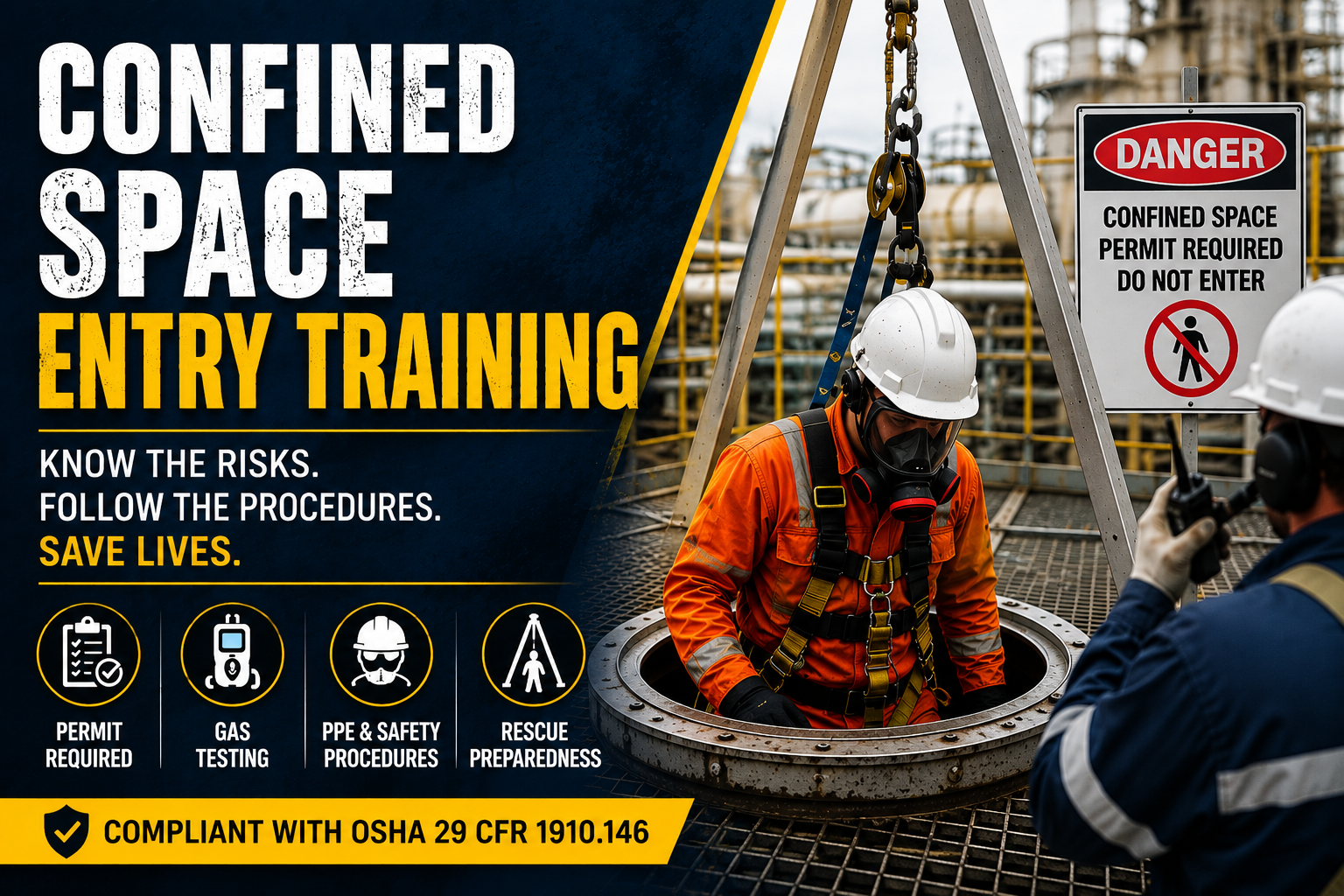
Confined spaces are among the most unpredictable and high-risk work environments across heavy industries. Whether managing offshore oil & gas rigs, marine vessel maintenance, commercial construction, or petrochemical manufacturing, entering an enclosed area demands absolute technical precision.Workers routinely enter storage tanks, pressure vessels, silos, sewers, and pipelines for critical cleaning, inspection, and repairs. However, if proper atmospheric testing and entry permit protocols are bypassed, a minor error can instantly escalate into a fatal incident.Understanding the distinct classification of these hazards, regulatory mandates, and emergency extraction procedures is the only way to safeguard your personnel and maintain regulatory compliance.Industrial Confined Space Training MatrixTo ensure total site safety, workforce compliance is split into two distinct operational roles. Review the criteria below to see which specialized certification your personnel require:Training ProgramPrimary FocusBest Suited ForConfined Space EntryHazard recognition, 4-gas air monitoring, permit authorization, and entrant/attendant roles.General laborers, tank cleaners, safety inspectors, and supervisors.Confined Space RescueTechnical tripod deployment, high-angle extraction mechanics, and SCBA rescue operations.Emergency Response Teams (ERT), standby rescue crews, and HSE managers.[Click Here to Explore Confined Space Entry Course Details][Click Here to Explore Advanced Confined Space Rescue Training]Defining a Confined Space: Criteria and ClassificationsAccording to international industrial frameworks, an environment is officially classified as a confined space if it satisfies three strict parameters:It is large enough and so configured that an employee can bodily enter and perform assigned work.It has limited or restricted means for entry or exit (e.g., manholes, hatches, or narrow shafts).It is explicitly not designed for continuous human occupancy.Permit-Required vs. Non-Permit Confined SpacesSafety regulations draw a sharp operational line based on the presence of immediate physical threats:Non-Permit Confined Space: A space that meets the basic definition of a confined space but does not contain atmospheric or structural hazards capable of causing severe systemic harm or death.Permit-Required Confined Space (PRCS): A space that poses immediate dangers, including a verified potential for a hazardous atmosphere, materials capable of engulfing an entrant, or internal walls that taper into smaller cross-sections leading to entrapment.The Core Defenses: Entry Permits and Atmospheric Monitoring[Isolate Area (LOTO)] ──► [Test Atmosphere] ──► [Issue Permit] ──► [Authorize Entry]1. The Confined Space Entry PermitAn entry permit is a binding safety contract. It serves as documented verification that the work area has been systematically evaluated by a competent person before any worker crosses the threshold. A valid permit must clearly detail isolation protocols (like Lockout/Tagout), current gas monitor data, a roster of authorized entrants, and an active communication log between the entrant and the Standby Attendant.2. Atmospheric Testing and Continuous Air MonitoringStatistics show that atmospheric hazards account for the vast majority of confined space fatalities. Pockets of gas can be completely odorless and invisible, making calibrated 4-gas air monitors mandatory. Workers entering these structures face three common airborne threats:Oxygen Deficiency: Levels falling below 19.5% due to microbial action, metal oxidation (rust), or purging gases like nitrogen.Toxic Gas Accumulation: Sudden exposure to lethal concentrations of Hydrogen Sulfide ($H_2S$) or Carbon Monoxide ($CO$).Flammable/Explosive Vapors: Methane or fuel vapors that cross the Lower Explosive Limit (LEL), where a single non-intrinsically safe tool can spark an explosion.Site Protocol: Atmospheric testing must always be performed from the outside using sampling pumps before entry, and air monitoring must remain continuous throughout the shift. Learn how to configure these systems in our [Confined Space Entry Certification].Technical Extraction: Essential Confined Space Rescue EquipmentWhen an emergency occurs inside an enclosed cell, time is measured in seconds. Shockingly, more than half of confined space fatalities involve untrained, well-meaning rescuers who rush into a toxic space without protection.An OSHA-compliant rescue protocol relies on specialized mechanical retrieval systems designed to extract an unconscious worker without requiring additional personnel to enter the space:Mechanical Retrieval Systems: Heavy-duty aluminum tripods paired with high-tensile retrieval winches and fall-arrest blocks.Full-Body Rescue Harnesses: Harnesses featuring dedicated shoulder or dorsal D-rings designed to keep an incapacitated worker perfectly vertical during a tight vertical extraction.Atmospheric Life Support: Positive-pressure Self-Contained Breathing Apparatus (SCBA) or airline systems equipped with emergency escape cylinders for the extraction crew.Emergency Readiness: Deploying structural tripods, managing mechanical advantages, and performing real-time vertical extractions requires intense, hands-on muscle memory. Train your standby safety team with advanced field simulations via our comprehensive [Confined Space Rescue Course].Conclusion: Partner with Elite Offshore Pvt. Ltd.Managing confined space operations requires verified competence. Whether your assets involve onshore chemical storage tanks or offshore marine cargo holds, cutting corners on safety training introduces extreme operational and financial liabilities.Empower your personnel with the real-world skills needed to identify structural hazards, handle multi-gas detectors, and execute flaw-free emergency retrievals.Take the Guesswork Out of Industrial Safety Compliance.This guide is brought to you by Elite Offshore Pvt. Ltd., India’s premier destination for globally aligned marine, oil & gas, and industrial safety certifications.Ready to book a dedicated training slot for your engineering or safety crew?[Click Here to Enroll in Our Confined Space Entry Program] or contact our corporate training coordinators today to build a custom training calendar for your workforce.
More detailsPublished - Thu, 11 Jun 2026
Created by - Elite Offshore Pvt Ltd
The Pillar of Heights: Why Professional Scaffolder and Inspector Training is Non-Negotiable
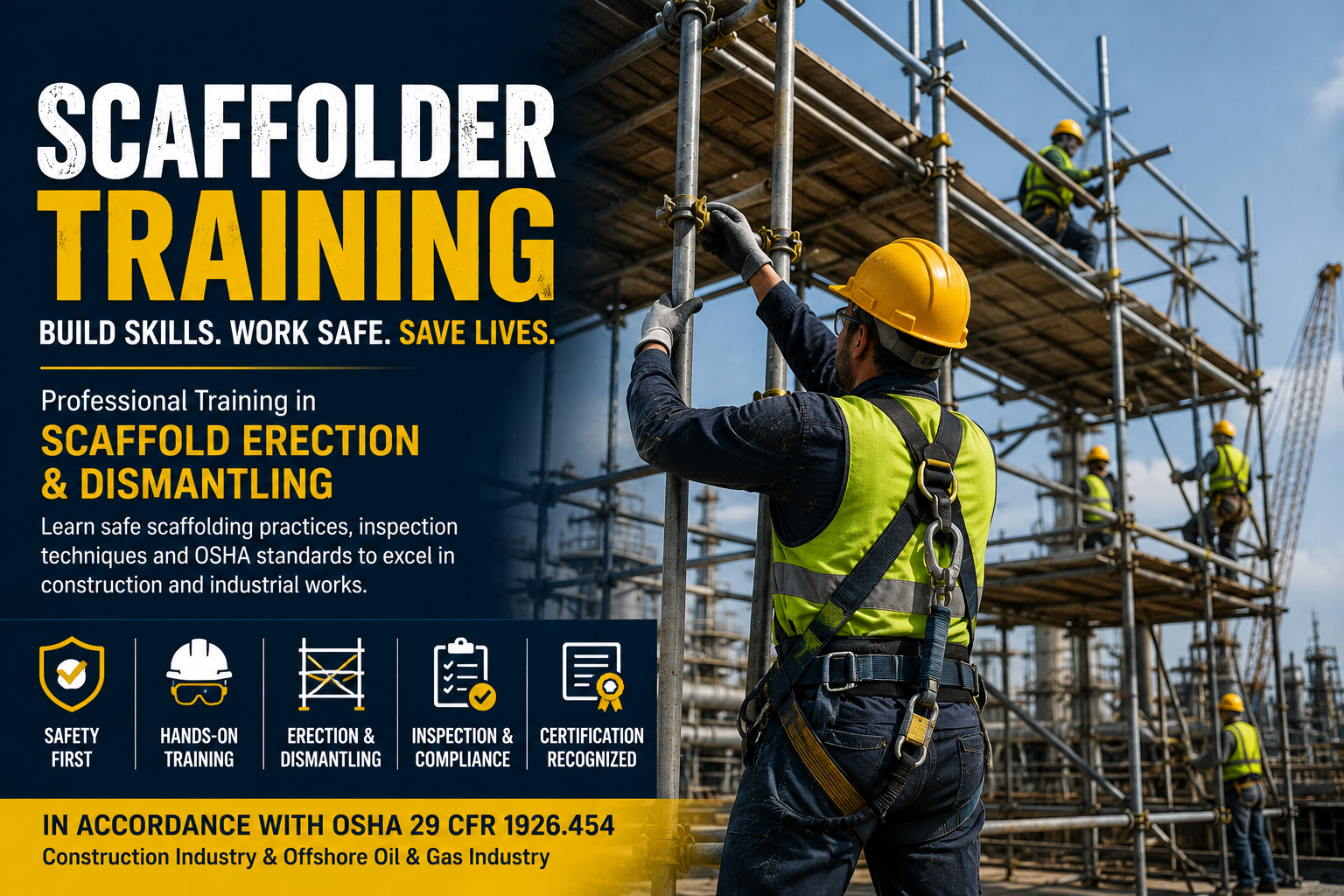
Scaffolding plays a critical role in construction, offshore operations, heavy industrial maintenance, and infrastructure projects. It provides personnel with safe access to elevated work areas while supporting the tools, equipment, and materials required to complete a project efficiently.However, when scaffolds are erected, altered, or dismantled incorrectly, the consequences are invariably severe—leading to catastrophic falls, structural failures, and strict regulatory penalties.This is why professional training isn't just a compliance checkbox; it is one of the most critical safety investments a company can make.Understanding the Two Lines of Defense: Scaffolder vs. InspectorA safe worksite requires two distinct types of trained professionals working in tandem:The Qualified Scaffolder: The individual trained in the physical mechanics, manual assembly, load calculation, and structural balancing required to build the asset safely.The Certified Scaffolding Inspector: The independent eye or "Competence Person" who systematically audits the structure against international standards, signs off on the safety tags, and identifies hidden defects before any worker steps onto the planks.Common Scaffold Systems in Modern WorksitesToday’s industrial and offshore landscapes utilize highly specialized scaffolding systems engineered for specific load capacities and environments:Tube and Clamp Scaffolds: Highly adaptable, making them the standard for complex geometry on offshore rigs and industrial refineries.System / Modular Scaffolds (Frame): Prefabricated components that allow fast, rigid assembly on commercial construction sites.Suspended Scaffolds: Platforms suspended by ropes or cables, commonly used in marine shipbuilding and high-rise maintenance.Mobile Access Towers: Rolling scaffold systems designed for short-term, multi-location tasks.Each system features unique structural physics and requires precise planning, assembly, and rigorous pre-use inspection.Course Inquiry: Are your site supervisors qualified to sign off on these complex structures? Explore our [Scaffolding Inspector Certification Program] to ensure total regulatory compliance.The Danger of Hidden Hazards & OSHA ComplianceWorking at height involves far more than simply locking metal components together. Personnel must deeply understand load limits, foundation integrity, anchorage methods, and fallback protection systems.According to OSHA 29 CFR 1926.454, employers are legally mandated to provide comprehensive training for any employee who erects, operates, maintains, or inspects scaffolds. Proper professional training directly mitigates the most common site risks:Unstable Foundations: Setting up heavy structures on soft earth or substandard soleboards without proper base plates.Incompatible Component Mixing: Forcing components from different manufacturers together, which severely compromises structural integrity.Missing Safeguards: Neglecting mid-rails, guardrails, or proper toe-boards.Environmental Loads: Failing to account for wind speeds, corrosion, and wave-action displacement in offshore environments.Why Routine Scaffold Inspection is Your Best Risk MitigationEven a flawlessly built scaffold can rapidly become lethal due to daily wear, heavy material loading, or shifting weather conditions. A certified Scaffolding Inspector is trained to spot minute vulnerabilities before they manifest as site incidents.Per international best practices, strict inspections must be documented and executed:Prior to the initial commissioning of the asset.Following any structural modification, alteration, or exposure to heavy impact.Immediately after severe weather conditions (high winds, heavy rain, or offshore storms).At strict, mandatory weekly intervals during ongoing operations.From inspecting the tightness of structural couplers (the clamps holding the tubes together) to evaluating standard vertical alignment and ledger levels, routine inspection directly preserves both lives and asset productivity.Building a Global Career via Scaffolding CertificationFor safety professionals, mechanical engineers, and site technicians looking to advance within the construction, oil & gas, or marine sectors, obtaining verified scaffolding credentials drastically increases global marketability.A professional training program doesn't just teach theory. It delivers practical, hands-on mastery over:Advanced scaffold erection and dismantling methodology.Load limits and structural physics calculations.Hazard identification and site-specific risk management.Comprehensive compliance with international HSE frameworks.Conclusion: Partner with Elite Offshore for Certified ExcellenceSite safety is built on a foundation of verifiable competence. Whether you are managing a short-term onshore commercial project using rental scaffolding or directing high-stakes, multi-level maintenance on a remote offshore installation, there is zero margin for error at height.Professional scaffolder and inspector training develops the exact skills needed to eliminate workplace risks, lower insurance liabilities, and maintain flawless operational uptime.Take the Guesswork Out of Site Safety.This article is brought to you by Elite Offshore Pvt. Ltd., a premier provider of globally aligned marine, oil & gas, and industrial safety training programs. Looking to certify your site crew or fast-track your team’s safety compliance?Contact our corporate training coordinators today for custom on-site batch allocations.
More detailsPublished - Thu, 11 Jun 2026
Created by - Elite Offshore Pvt Ltd
H2S Course: Why Hydrogen Sulphide Safety Training is Essential for High-Risk Workplaces
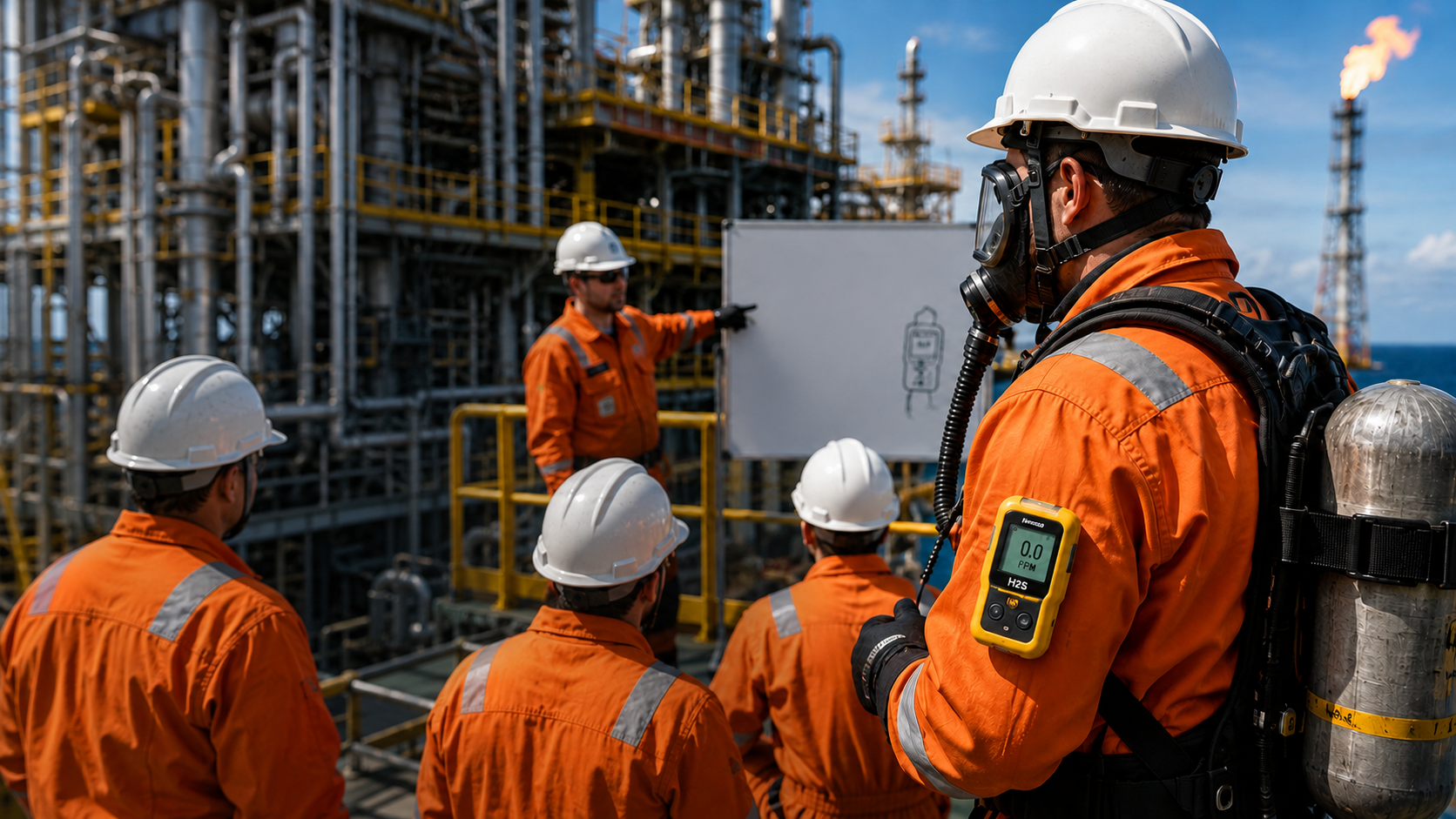
Hydrogen sulphide (H2S) is one of the most dangerous gases encountered in industrial operations. It is colourless, highly toxic, and can become life-threatening within seconds if workers are unprepared. Found in oil and gas production, refineries, petrochemical plants, wastewater treatment facilities, and confined spaces, H2S demands more than awareness—it requires practical training and disciplined safety practices.At Elite Offshore Pvt. Ltd., the H2S Course is designed to prepare participants to recognise hazards, use H2S detection devices correctly, wear personal protective equipment (PPE), operate respiratory protection such as SCBA and Escape Breathing Apparatus (EBA/ELSA), and respond effectively during emergencies. The programme combines classroom instruction with realistic practical exercises aligned with recognised industry expectations, including OSHA and ANSI guidance.What is Hydrogen Sulphide (H2S)?Hydrogen sulphide (H2S) is a naturally occurring gas generated by the decomposition of organic material and by industrial processes. Because it is heavier than air, it can accumulate in pits, tanks, trenches and other low-lying or confined areas. Workers cannot rely on smell because high concentrations quickly deaden the sense of smell.Why is H2S Dangerous?The major H2S gas hazards include eye and respiratory irritation, dizziness, unconsciousness and death at high concentrations. Safe operations depend on understanding H2S properties, following occupational exposure limits (OEL), monitoring the atmosphere continuously and acting immediately when alarms activate.Why an H2S Course Matters?In real workplaces, emergencies rarely provide time to read procedures. Workers must know exactly how to react. Quality H2S safety training teaches hazard recognition, gas monitoring, emergency evacuation, communication, and first aid while building confidence through practical drills. What You Learn• H2S properties and behaviour• Sources of hydrogen sulphide gas• H2S detection using portable and fixed monitors• Understanding H2S alarms and response• Occupational exposure limits (OEL)• Correct selection and use of personal protective equipment (PPE)• Respiratory protection using SCBA, ELSA and Escape Breathing Apparatus (EBA)• Pre-use equipment checks• H2S emergency response and evacuation• Basic first aid and rescue awarenessIndustries that Need H2S TrainingOil and gas exploration, offshore drilling, refineries, petrochemical plants, chemical processing, wastewater treatment, marine maintenance, confined space operations, and pipeline maintenance all benefit from trained personnel. H2S awareness is a critical part of workplace gas safety.Benefits of H2S Gas CertificationCompleting a recognised hydrogen sulphide course demonstrates that an individual understands hazard identification, emergency procedures, respiratory protection, and safe working practices. Employers value trained personnel because they contribute to safer operations and a stronger safety culture. Why Choose Elite OffshoreElite Offshore has built a reputation for delivering practical offshore and industrial safety training. Experienced instructors, modern equipment, and industry-focused exercises ensure participants gain knowledge they can apply immediately at work rather than simply completing a classroom requirement.Frequently Asked Questions1.What is an H2S Course?An H2S Course teaches workers how to identify hydrogen sulphide hazards, use gas detectors, wear protective equipment and respond safely during emergencies.2.Who should attend?Anyone working in oil and gas, offshore operations, refineries, petrochemical facilities, wastewater treatment or confined spaces where H2S may be present.3.Does the course include practical training?Yes. Participants receive practical instruction on H2S detection devices, SCBA, ELSA, emergency evacuation and equipment checks.4.Why is H2S detection important?Because hydrogen sulphide cannot be detected reliably by smell at dangerous concentrations. Gas detectors provide early warning and help prevent exposure.ConclusionEvery worker entering a potentially hazardous environment should understand the risks associated with hydrogen sulphide. A professionally delivered H2S Course provides the practical knowledge and confidence needed to recognise hazards, respond quickly, and protect lives. By combining theory with hands-on exercises, Elite Offshore helps organisations strengthen workplace gas safety and prepare their workforce for real-world situations.
More detailsPublished - Thu, 02 Jul 2026
Created by - Elite Offshore Pvt Ltd
The Ultimate Forklift Operator Certification Guide: How to Ensure 100% Site Compliance
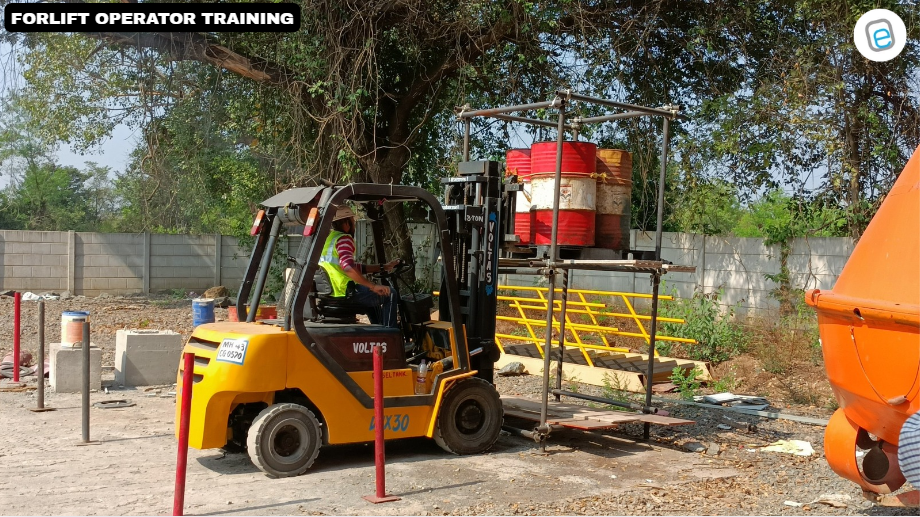
Every busy logistics hub, manufacturing yard, and offshore supply base relies heavily on material handling equipment. But behind every efficient fleet is a major legal and physical liability: the operator.According to global safety data, forklift-related incidents account for tens of thousands of serious workplace injuries annually. The majority of these accidents are entirely preventable and are directly linked to untrained or poorly evaluated drivers. Whether you are a warehouse manager trying to protect your business from massive regulatory penalties or an individual looking to upgrade your resume, understanding proper Forklift Operator Certification is critical. The Legal Framework: What Regulatory Bodies Actually RequireMany organizations mistakenly believe that a quick theoretical or online overview is enough to grant a valid forklift operator card. It is not. Under international regulatory frameworks, including OSHA 29 CFR 1910.178 (Powered Industrial Trucks), compliant training must follow a strict three-pronged approach: Formal Instruction: Classroom-style or multimedia delivery covering truck mechanics, vehicle capacity, and structural stability factors. Practical Training: Hands-on demonstrations and supervised training exercises performed directly on the type of machine the operator will be using. Workplace Evaluation: An on-site practical assessment to verify the operator can safely navigate the specific physical hazards of your actual workspace. ⚠️ Important Compliance Note: A certification is equipment-specific. An employee certified to operate a standard sit-down counterbalance forklift is not legally certified to operate a stand-up reach truck or a heavy-duty telehandler without receiving separate practical training and validation. Core Topics Covered in a Professional SyllabusTo successfully mitigate risks, a professional training curriculum cannot cut corners. Standard-compliant training program details include: 1. Mechanical Knowledge & The Stability TriangleUnlike cars, forklifts utilize a three-point suspension system (the two front tires and the center of the rear axle). This creates the Stability Triangle. If an operator carries a load that is too heavy, handles an elevated load improperly, or turns quickly on a ramp, the center of gravity shifts outside this triangle, causing an immediate vehicle tip-over. 2. Daily Pre-Operational InspectionsOperators are required by law to conduct visual and mechanical checks before every single shift. This inspection covers structural components like fork pins, fluid levels, tire pressures, and safety systems including brakes, horn, steering, and lights. Any defective truck must be locked out and removed from service immediately. 3. Navigating Workplace SpecificsDriving inside a closed warehouse requires specialized maneuvering skills. Training ensures operators understand floor load restrictions, overhead clearance limitations, narrow aisle stacking practices, and the golden rules for travelling on sloped ramps. Why Choose Our Certified Forklift Training Program?At Elite Offshore Pvt ltd, we don't just provide check-box certifications. We build elite, safe, and highly competent machine operators. Our comprehensive industrial training solutions deliver massive benefits to your business:100% Compliance Alignment: Our courses perfectly match the regulatory structure of international safety standards, keeping your business legally insulated. State-of-the-Art Practical Yard: Trainees get dedicated, extensive hands-on seat time on modern, well-maintained machinery under the direct supervision of qualified senior instructors. Tailored Corporate Solutions: We can bring our evaluation team directly to your site to perform the mandatory workplace assessments tailored to your specific logistical layout. Robust Verification & Documentation: Upon passing, your business receives instant access to transparent, audit-ready training logs, compliance certificates, and wallet cards. Book Your Training Batch TodayDon’t wait for a near-miss or a costly regulatory audit to correct your site safety standards. Invest in professional technical training that preserves your equipment, protects your cargo, and saves lives. ???? [Click Here to Book Your Forklift Operator Training Course]Have a large team? Contact our corporate desk directly on 914 80-9747-2277 to receive customized group training quotes and schedules tailored to your operations.
More detailsPublished - Mon, 06 Jul 2026
Created by - Elite Offshore Pvt Ltd
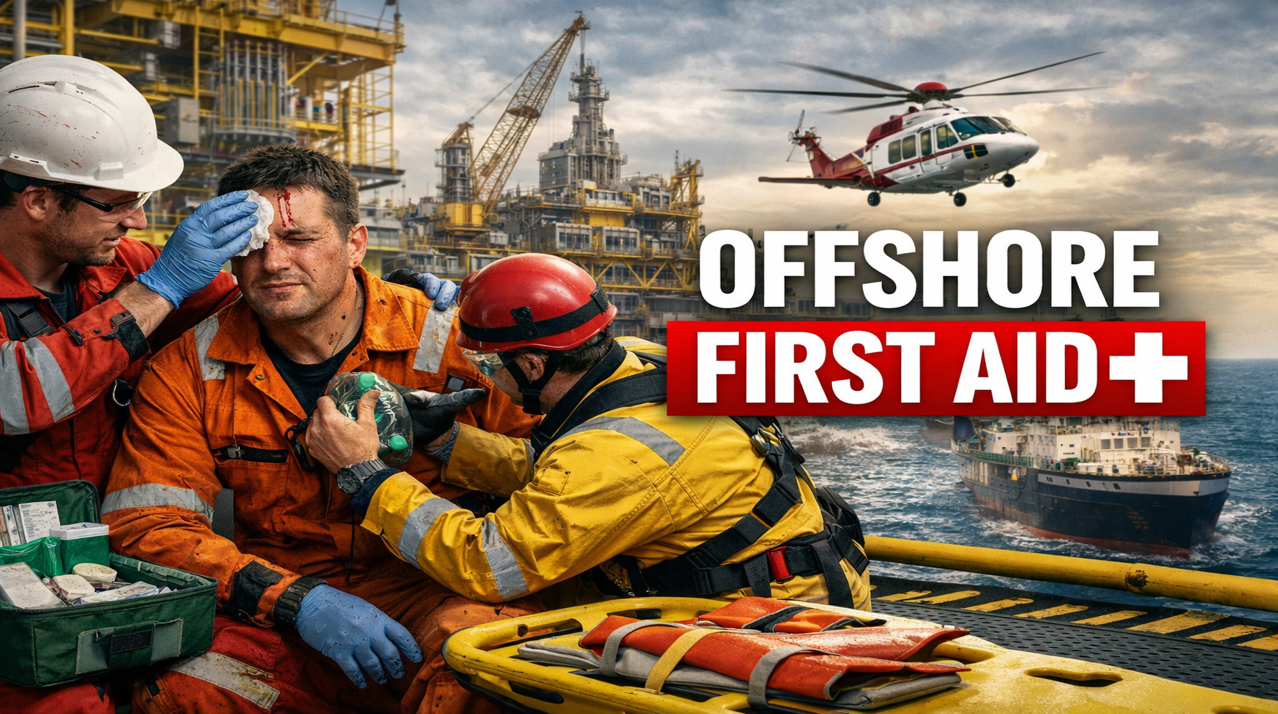
7 First Aid Mistakes That Turn a Minor Offshore Injury Into a Fatality
The Injury Itself Rarely Kills. What Happens Next Often Does.Talk to enough offshore medics and safety officers, and you'll hear the same thing: most fatalities and permanent injuries on rigs, vessels, and industrial sites aren't caused by the initial incident. They're caused by what the people around the victim did — or didn't do — in the first five minutes.A cut doesn't kill a man. Untreated bleeding does. A fall doesn't paralyze someone. Moving them wrong afterward can.This isn't a checklist post. This is what actually goes wrong on real sites, based on documented incident patterns in offshore and industrial settings — and why "we'll wait for the medic" is sometimes the most dangerous sentence in the room.Mistake #1: Moving an Injured Person ImmediatelyThe instinct is to help someone up, get them to a chair, get them "somewhere comfortable." On a rig or vessel, this instinct has paralyzed people with spinal injuries that would otherwise have been survivable. If there's any chance of a back, neck, or head injury from a fall or impact, the correct move is often no move at all until it's assessed properly.Mistake #2: Applying a Tourniquet — Or Not Applying One — At the Wrong TimeOffshore crews are often taught outdated ideas about tourniquets: that they're a last resort, that they'll cost someone a limb. Modern protocol is the opposite — for severe limb bleeding, a tourniquet applied early saves lives, and the "will cost a limb" myth has caused fatal hesitation in real cases. Equally, using one for a wound that just needs direct pressure can cause unnecessary tissue damage.Mistake #3: Giving Water or Food to Someone in ShockIt feels like comfort. It's often the wrong call. A person going into shock can lose the ability to swallow safely, and food or water can lead to choking or aspiration — a completely preventable complication stacked on top of the original injury.Mistake #4: Removing a Large Embedded ObjectNails, metal shards, tools — if something is impaled and still in the body, pulling it out is frequently the instinct and frequently wrong. In many cases, the object itself is partially controlling blood loss. Untrained removal can trigger catastrophic bleeding that wasn't happening a moment before.Mistake #5: Misreading a Heart Attack as Heat Exhaustion (Or Vice Versa)On offshore and industrial sites, heat stress is common enough that chest tightness, sweating, and nausea get written off as "just the heat." Crews have lost critical time treating a cardiac event as dehydration. The symptoms can look similar; the response can't afford to guess.Mistake #6: Freezing Because "Someone More Qualified Will Handle It"This is the most common failure, and the least discussed. On a crew of twenty, everyone assumes someone else knows what to do — so nobody moves for the first crucial minute. In cardiac arrest, survival odds drop by roughly 7–10% for every minute without CPR. That minute of hesitation is often the only difference that matters.Mistake #7: Not Knowing Where the AED Is — Or Assuming It's Not Needed YetMany worksites have an AED sitting in a cabinet that's rarely checked and rarely practiced with. In a cardiac event, people hesitate to use it because they've never actually held one before. An AED talks you through every step — the barrier isn't skill, it's unfamiliarity.Why This Keeps HappeningNone of this is about crews being careless. It's about the gap between knowing first aid exists and being trained to act on it under real pressure, with adrenaline running and someone's life actually on the line. Reading a poster in the break room is not the same as having done chest compressions on a mannequin, applied a tourniquet under a trainer's watch, or practiced the exact seconds-long decision of whether to move someone or not.That gap is exactly what proper, hands-on Basic First Aid training closes.What Changes With Real TrainingCrews that go through structured, practical Basic First Aid training don't just learn steps — they build the reflex to act instead of freeze, and the judgment to make the right call instead of the intuitive one. Elite Offshore's Basic First Aid course is built specifically around these real-world failure points, with hands-on practice — not just theory — so your team doesn't hesitate when it counts.Get in touch to bring this training onsite, online, or at our facility. Elite Offshore Pvt Ltd — Offshore, Marine & Industrial Safety Training.
More detailsPublished - Tue, 07 Jul 2026
Created by - Elite Offshore Pvt Ltd
Confined Space Entry Course (CSE): Practical Safety Training That Prevents Workplace Accidents
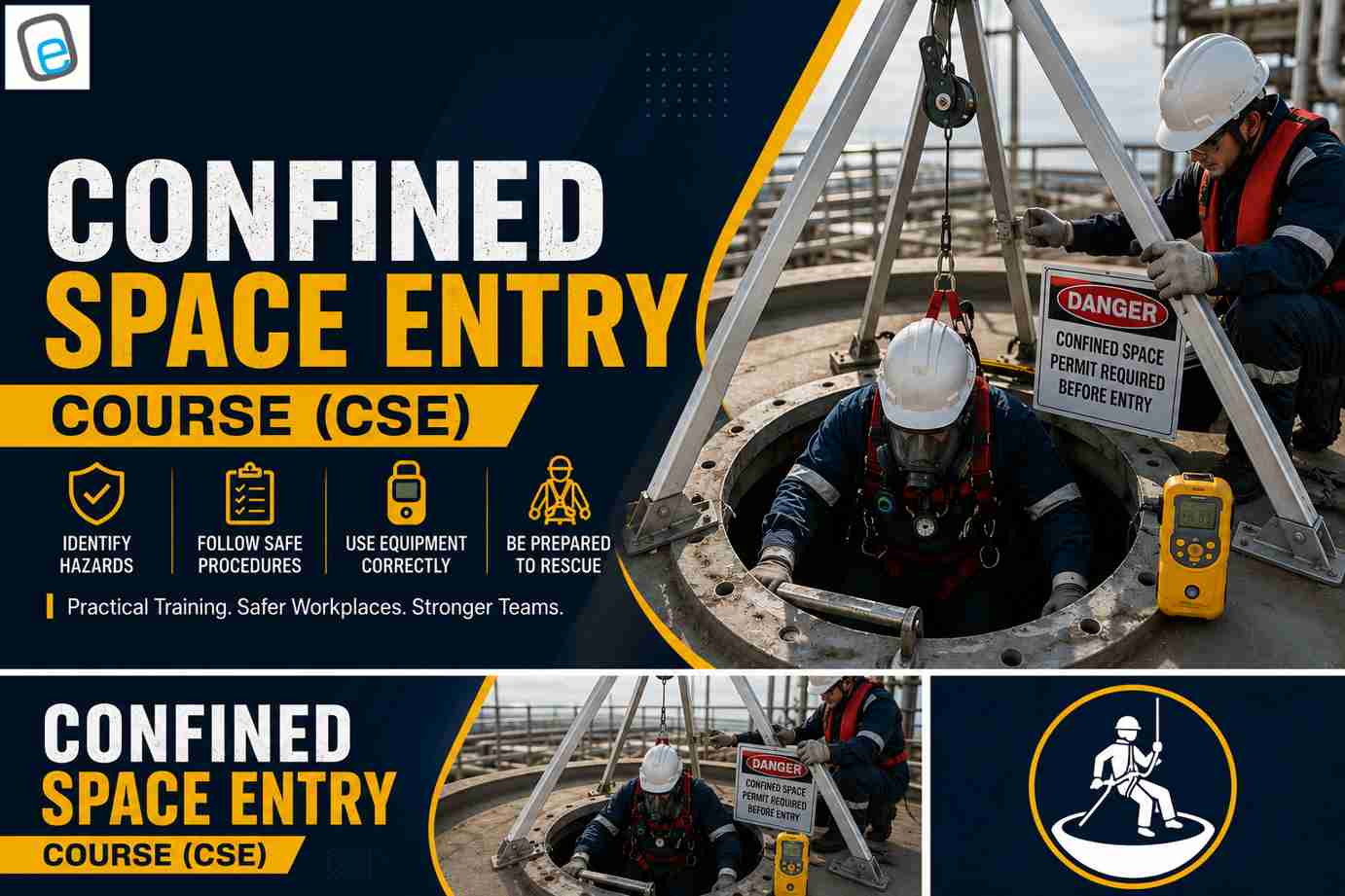
Every year, serious workplace incidents occur because a confined space appears safe when, in reality, hidden hazards exist inside. Storage tanks, ballast tanks, cargo holds, silos, pits, manholes, pipelines, and process vessels may contain toxic gases, oxygen-deficient atmospheres, or flammable vapours that cannot be detected without proper testing.For offshore, marine, oil & gas, manufacturing, construction, and heavy industrial sectors, confined space entry is one of the most critical safety activities. A single mistake can put not only the worker at risk but also the rescue team responding to an emergency.This is why proper training matters.At Elite Offshore Pvt Ltd, the Confined Space Entry Course (CSE) is designed to provide practical knowledge, hands-on exercises, and internationally aligned safety practices that help workers identify hazards, work safely, and comply with workplace regulations.Why Confined Space Entry Requires Specialized TrainingMany confined spaces are not intended for continuous occupancy and have limited means of entry and exit. Conditions inside these spaces can change rapidly due to:Oxygen deficiency or oxygen enrichmentToxic gas accumulationFlammable atmospheresPoor ventilationEngulfment hazardsMechanical or electrical risksRestricted movement during emergenciesWithout proper planning, workers may unknowingly enter dangerous environments. A structured confined space entry course teaches participants how to recognise these hazards before entering the work area.Understanding Permit-Required Confined SpaceOne of the most important concepts covered during the training is identifying a permit-required confined space.Participants learn:When a confined space requires formal authorizationHow to complete a confined space permitResponsibilities of entrants, attendants, and supervisorsRisk assessment proceduresSafe isolation methodsContinuous atmospheric monitoringEmergency response planningUnderstanding the difference between a permit-required confined space and a non-permit confined space helps workers follow the correct safety procedures before any task begins.Practical Learning Beyond the ClassroomSafety cannot be learned only through presentations.The Confined Space Entry Course at Elite Offshore combines theory with practical exercises that simulate real workplace situations.Participants gain experience in:Hazard identificationAtmospheric testingGas detector operationVentilation techniquesPersonal Protective Equipment (PPE)Safe entry and exit proceduresCommunication protocolsEmergency response awarenessRescue planningPermit-to-Work (PTW) proceduresThis practical approach helps participants respond confidently during actual work operations rather than relying solely on theoretical knowledge.Importance of Gas Detection Before EntryMany confined space incidents occur because dangerous gases cannot be seen or smelled.The course explains how air monitors for confined spaces are used to measure:Oxygen concentrationHydrogen Sulphide (H₂S)Carbon Monoxide (CO)Flammable gasesOther hazardous atmospheric contaminantsParticipants understand when monitoring should be continuous and how atmospheric testing supports safe decision-making before and during entry.Confined Space Entry Permit: More Than Just PaperworkA confined space entry permit is a critical safety document that confirms all required precautions have been completed before anyone enters a confined area.Training covers:Hazard assessmentIsolation and Lockout/Tagout verificationGas testing recordsCommunication arrangementsEmergency contact proceduresPPE verificationRescue readinessPermit authorizationCorrect use of the confined space entry permit significantly reduces workplace risks and supports regulatory compliance.Rescue Awareness Saves LivesRescue attempts without planning often place additional workers in danger.The course includes awareness of confined space entry and rescue principles, helping participants understand:Rescue planningEmergency communicationStandby personnel responsibilitiesSafe evacuation methodsWhen specialist rescue teams should respondWorkers also gain awareness of confined space retrieval system components and how rescue preparations should be established before entry begins.Equipment Used During Confined Space OperationsProper equipment plays a major role in safe operations.During practical sessions, participants become familiar with common confined space rescue equipment, including:Multi-gas detectorsVentilation blowersEscape breathing devicesTripodsWinchesHarnessesLifelinesCommunication systemsUnderstanding how each piece of equipment functions helps workers perform their duties safely while supporting emergency preparedness.OSHA Requirements and International Safety PracticesMany multinational organisations follow internationally recognised safety practices alongside local regulations.The course introduces participants to important concepts related to:OSHA confined spaceOSHA permit required for confined spaceOSHA requirements for confined space rescueRisk assessmentSafe systems of workPermit-to-Work implementationThis knowledge helps professionals working with international clients understand globally accepted safety expectations while strengthening workplace compliance.Confined Space Signage MattersA properly marked worksite prevents unauthorised entry and improves hazard awareness.Participants also understand the importance of:Signage confined spaceSignage for confined spaceRestricted access noticesWarning labelsEntry authorization boardsEmergency contact displaysClear signage supports safer work environments and improves communication among all personnel on site.Building a Strong Confined Space ProgramA safe workplace depends on more than individual training.An effective confined space program includes:Hazard identificationRisk assessmentsPermit proceduresGas monitoringEquipment inspectionsEmergency response planningWorker competencyRegular refresher trainingOrganisations that maintain a structured safety program are better prepared to prevent incidents and improve operational efficiency.Who Should Attend This Confined Space Course?This confined space course is suitable for professionals working in:Offshore oil & gasMarine operationsShipyardsPetrochemical plantsRefineriesManufacturing facilitiesConstruction projectsPower plantsMunicipal servicesHeavy industriesIt is valuable for workers, supervisors, safety officers, maintenance personnel, contractors, inspectors, and emergency response teams who may be involved in confined space entrance activities.Why Choose Elite Offshore Pvt Ltd?For years, Elite Offshore Pvt Ltd has been providing professional offshore, marine, and industrial safety training with a strong focus on practical learning.The confined space entry course offers:Experienced industry instructorsPractical training exercisesInternationally aligned safety practicesRealistic workplace scenariosStrong focus on hazard identificationPermit-to-Work understandingGas detection practical sessionsRescue awarenessIndustry-recognised certificationThe training helps participants build confidence while supporting safer workplaces and stronger regulatory compliance.ConclusionEvery confined space presents unique risks, and no two work environments are exactly alike. Proper preparation, hazard recognition, atmospheric testing, permit procedures, and emergency planning work together to reduce incidents before they occur.Whether you are entering a tank, cargo hold, vessel compartment, pit, silo, or industrial process area, completing a professional Confined Space Entry Course provides the practical knowledge needed to work safely and responsibly.If your role involves confined space entry, investing in quality training today can help prevent workplace accidents tomorrow.Learn more about Elite Offshore Pvt Ltd's Confined Space Entry Course (CSE): https://eliteoffshore.in/home/course/confined-space-entry-course-cse/50
More detailsPublished - Thu, 16 Jul 2026

Created by - Elite Offshore Pvt Ltd
Scaffolder Training: Build a Safe and Rewarding Career with Professional Scaffolding Certification
Every construction site, refinery, shipyard, offshore platform, and industrial plant depends on one thing before any major work begins—safe access. That access is made possible through properly erected scaffolding, and behind every secure scaffold is a trained scaffolder.As industries continue to strengthen workplace safety standards, skilled scaffolders are in high demand across construction, offshore oil and gas, marine engineering, power plants, and infrastructure projects. Companies are actively looking for professionals who understand scaffold erection, dismantling, inspection, load management, and working-at-height safety.If you're planning a career in industrial safety or construction, enrolling in a professional scaffolding course can provide the technical knowledge and practical skills employers expect.What Does a Scaffolder Do?A scaffolder is responsible for assembling, modifying, inspecting, and dismantling temporary scaffold structures that provide safe working platforms for personnel performing tasks at height.The job goes beyond simply joining steel tubes together. Professional scaffolders must understand:Reading scaffold plansSelecting suitable materialsSafe erection proceduresStructural stabilityLoad-bearing capacityFall protection systemsHazard identificationSafe dismantling techniquesInspection before and after useEvery scaffold must comply with safety regulations because even a small mistake can create serious risks for everyone working above ground level.Why Professional Scaffolder Training MattersMany workplace accidents occur because scaffolds are improperly assembled or insufficiently inspected.Professional scaffolder training teaches candidates how to identify hazards before they become incidents. Rather than learning only theoretical concepts, trainees practice real scaffold assembly using industrial equipment under instructor supervision.Employers value trained professionals because they understand:Safe work proceduresInternational safety standardsRisk assessmentProper use of PPEScaffold inspection methodsEmergency response proceduresRegulatory complianceThese skills improve workplace safety while increasing employment opportunities across multiple industries.Industries That Hire Certified ScaffoldersA qualified scaffolder can work across several industrial sectors, including:Offshore oil and gasMarine and shipbuildingCommercial constructionIndustrial plant maintenancePetrochemical facilitiesPower generation plantsHeavy engineering projectsInfrastructure developmentManufacturing facilitiesBecause scaffolding is required in nearly every large industrial project, trained professionals continue to remain in demand throughout India and internationally.What You'll Learn in a Scaffolding CourseA quality scaffolding course combines classroom instruction with extensive practical exercises.At Elite Offshore Pvt. Ltd., the Scaffold Erection and Dismantling Training Course is designed to prepare candidates for real industrial work environments. The program includes one day of classroom theory followed by two days of practical training at its industrial training facility in Navi Mumbai. The training covers:Scaffold TypesCandidates gain hands-on experience working with different scaffold systems, including:Frame scaffolding systemsTube and clamp scaffoldsSuspended scaffoldsMobile scaffoldsOffshore staging systemsUnderstanding when and where each scaffold type should be used is a fundamental part of safe site operations.Scaffold Erection and DismantlingParticipants learn the correct sequence for:Site preparationFoundation checksScaffold assemblyStructural modificationsSafe dismantlingEquipment storageProper sequencing helps maintain structural stability throughout every stage of the project.Scaffold Inspection TrainingAn important component of the course is scaffold inspection training, where candidates learn how to identify damaged components, loose fittings, unstable foundations, missing guardrails, overloaded platforms, and other common safety issues.Inspection procedures include:Pre-use inspectionsRoutine workplace inspectionsPost-use inspectionsMaintenance reportingEquipment condition assessmentThese inspection skills play a significant role in reducing workplace accidents.Importance of Scaffold SafetyWorking at height is among the highest-risk activities in construction and industrial operations.Professional training focuses heavily on:Fall preventionWorking safely at heightHazard identificationSafe access systemsMaterial handlingLoad calculationsEmergency proceduresPersonal Protective Equipment (PPE)Understanding these safety practices protects not only the scaffolder but also every worker using the scaffold during daily operations.Why Scaffolding Certification Makes a DifferenceA recognised scaffolding certification demonstrates that an individual has completed structured training and understands accepted industry practices.For employers, certification provides confidence that new hires possess practical knowledge rather than relying solely on on-site learning.For candidates, certification often improves:Job opportunitiesProfessional credibilityWorkplace confidenceCareer progressionEligibility for industrial and offshore projectsMany companies now prefer certified scaffolders when recruiting for large industrial projects.Practical Training Creates Job-Ready ProfessionalsReading manuals alone cannot prepare someone for scaffold work.Hands-on training allows participants to:Assemble complete scaffold structuresUse scaffold components correctlyHandle fittings and coupler systems safelyPractice inspectionsUnderstand scaffold stabilityPerform dismantling proceduresThis practical exposure helps candidates transition more confidently into real workplace environments.Why Choose Elite Offshore for Scaffolder Training?Elite Offshore Pvt. Ltd. has established itself as a trusted provider of offshore, industrial, marine, and workplace safety training in India. Based in Navi Mumbai, the institute offers industry-focused programs delivered by experienced instructors with practical field knowledge. The Scaffolder course includes:Professional classroom instructionPractical industrial trainingExperienced safety trainersScaffold erection and dismantling exercisesScaffold inspection techniquesSafety and compliance trainingReal-world industrial applicationsThe course is suitable for:Freshers entering the construction industryOffshore job aspirantsIndustrial maintenance personnelExisting scaffold workers seeking formal certificationProfessionals aiming to improve workplace safety knowledgeCareer Opportunities After Completing Scaffolder TrainingAfter completing professional training, candidates may pursue roles such as:ScaffolderScaffold ErectorIndustrial Scaffolding TechnicianOffshore ScaffolderMaintenance ScaffolderConstruction Scaffolding SpecialistIndustrial Safety Crew MemberWith additional experience and advanced qualifications, professionals can progress into scaffold inspection, supervision, and safety management positions.ConclusionScaffolding is one of the most critical elements of safe industrial operations. A properly trained scaffolder helps create secure working environments that protect workers while supporting construction, maintenance, and offshore activities.Choosing a structured scaffolder training program provides more than technical knowledge—it builds practical skills, strengthens safety awareness, and prepares candidates for employment across multiple industries.For anyone looking to build a long-term career in construction, offshore operations, or industrial maintenance, professional scaffolding certification from Elite Offshore Pvt. Ltd. offers a strong foundation backed by practical training and industry-focused instruction.
More detailsPublished - Thu, 16 Jul 2026
Created by - Elite Offshore Pvt Ltd
Helicopter Underwater Escape Training (HUET): Why Every Offshore Professional Needs It?
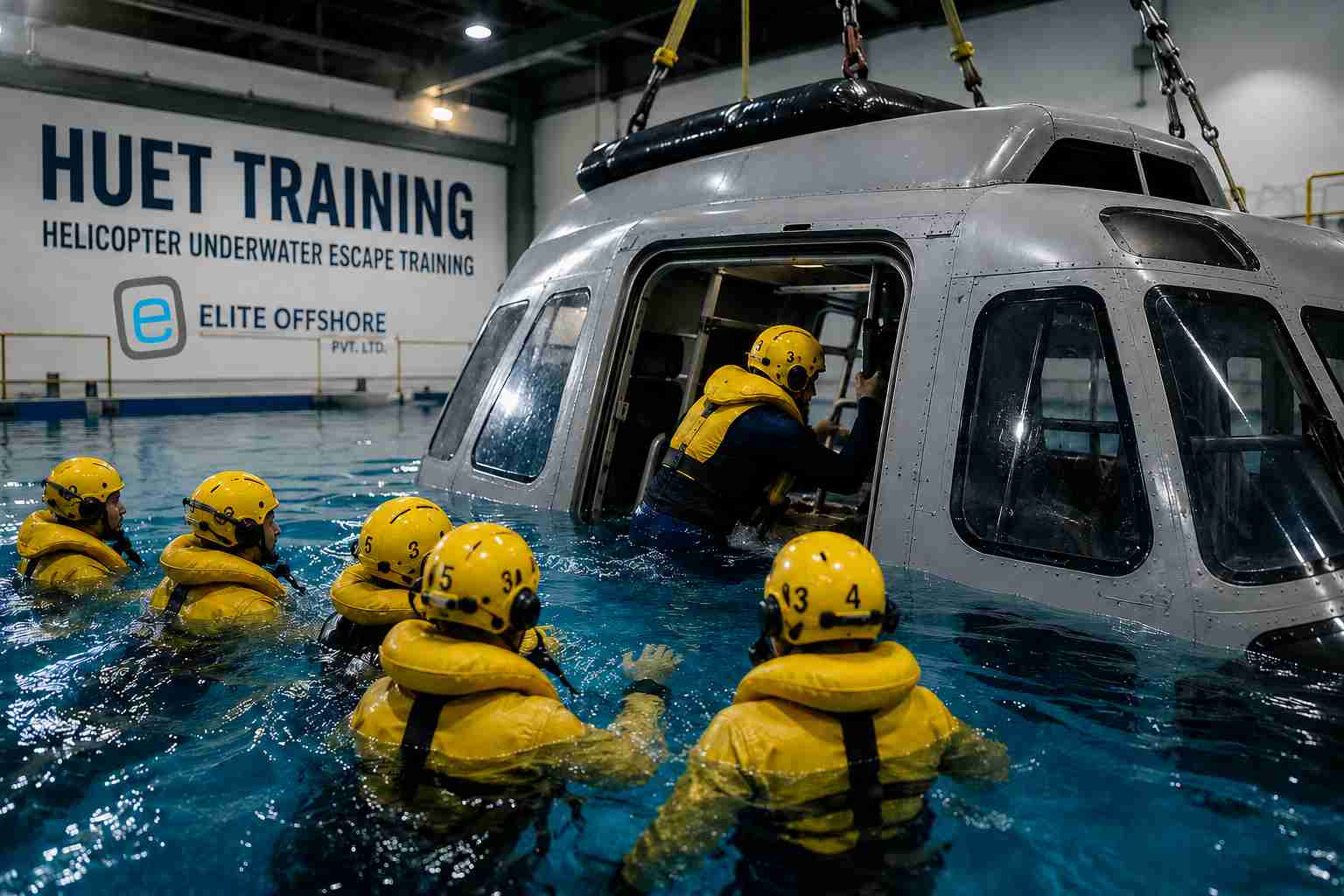
Working in the offshore oil and gas industry comes with unique challenges, and one of the most critical is travelling by helicopter to offshore installations. Although helicopter transportation is one of the safest methods of reaching offshore platforms, every offshore professional must be prepared for emergency situations. This is exactly why Helicopter Underwater Escape Training (HUET) has become an essential safety requirement for offshore personnel across the world.At Elite Offshore Pvt Ltd, the Helicopter Underwater Escape Training (HUET) course prepares participants with the practical skills, confidence, and emergency response techniques required to survive a helicopter ditching at sea. The course combines classroom learning with realistic underwater simulations so that participants know exactly what to do if an emergency occurs. The training follows publicly available offshore oil and gas industry guidelines and focuses on practical competence for helicopter travel.What is Helicopter Underwater Escape Training (HUET)?Helicopter Underwater Escape Training is a specialised safety programme developed for personnel travelling to offshore oil and gas installations and vessels by helicopter. The course prepares learners for both pre-flight and in-flight safety procedures while teaching the emergency actions required if a helicopter makes an emergency landing or ditches into the sea.The primary objective of HUET training is to ensure that every participant can safely evacuate a submerged helicopter, use emergency breathing equipment correctly, assist fellow passengers when possible, and reach a life raft safely during an emergency.Why HUET Training Is Mandatory for Offshore PersonnelA helicopter emergency over water is rare, but when it happens, passengers have only a few moments to react. Panic and lack of preparation can make the situation far more dangerous.This is why many offshore operators require employees and contractors to complete a recognised HUET course before travelling offshore. The practical exercises provide valuable experience that cannot be gained through classroom learning alone.The training is suitable for:Offshore oil and gas professionalsDrilling personnelOffshore engineersMarine crewPlatform maintenance teamsOffshore supervisorsContractors travelling by helicopterPersonnel joining offshore vessels or installations by airWhat You Learn During Helicopter Underwater Escape TrainingElite Offshore Pvt Ltd delivers practical helicopter underwater training using realistic simulation equipment that closely represents offshore emergency situations.Participants learn how to:Prepare before helicopter boardingWear aviation transit suits and lifejackets correctlyPerform Emergency Breathing System (EBS) checksUnderstand helicopter safety procedures before take-offRespond correctly during an emergency landingEscape safely from a partially submerged helicopterEscape from a fully capsized helicopter underwaterUse Emergency Breathing Systems during evacuationExit through underwater windowsReach and board an aviation life raftSupport other passengers after evacuationEvery exercise helps participants build confidence while improving their emergency decision-making skills.Practical Helicopter Escape Training Makes the DifferenceReading emergency procedures is helpful, but practical experience creates muscle memory.During helicopter escape training, participants enter a specialised training simulator that recreates realistic offshore helicopter ditching conditions. They practise locating exits underwater, maintaining orientation after inversion, controlling breathing, and following the safest escape route.This realistic approach helps reduce panic and improves reaction time during an actual emergency.Understanding Underwater Escape TrainingMany people underestimate how quickly conditions can change after a helicopter enters the water.Good underwater escape training teaches participants how to:Stay calm underwaterWait for helicopter movement to stopIdentify emergency exitsMaintain reference pointsRelease the seatbelt correctlyExit in an organised mannerSurface safelyAssist others whenever possibleThese practical skills are invaluable for offshore personnel travelling regularly by helicopter.What is HUET CA-EBS?Many offshore operators now require personnel to understand HUET CA-EBS procedures.CA-EBS (Compressed Air Emergency Breathing System) provides additional breathing time during underwater evacuation. Participants learn how to inspect the equipment, deploy it correctly, breathe safely underwater, and use it throughout the helicopter escape sequence where applicable.Helicopter Egress Training Builds ConfidenceAnother important part of the programme is helicopter egress training.This practical exercise focuses on:Controlled exitsWindow operationEscape sequencePassenger coordinationEmergency communicationSafe evacuation techniquesRepeated practice helps participants react confidently during stressful situations.Is OPITO HUET Important?Many offshore employers specifically request OPITO HUET or equivalent recognised offshore safety training depending on project and operator requirements.Before joining any offshore assignment, candidates should always confirm the exact certification required by their employer or client.HUET Training CertificateAfter successfully completing the programme, participants receive a HUET training certificate in accordance with the applicable course requirements. This certificate demonstrates that the learner has successfully completed both the theoretical and practical components of the training.HUET Course Fees and Training CostOne of the common online searches is HUET course fees or Helicopter Underwater Escape Training cost.Training fees can vary depending on the training provider, approval requirements, facilities, equipment, and course structure. Instead of choosing a course based only on price, professionals should consider the quality of practical exercises, instructor experience, and industry recognition.For the latest fee details, candidates should contact Elite Offshore Pvt Ltd directly through the official course page.Looking for HUET Training Near Me?If you are searching online for HUET training near me, Elite Offshore Pvt Ltd offers professional offshore safety training from its modern training centre in CBD Belapur, Navi Mumbai. The institute has been providing offshore, marine, and industrial safety programmes since 2015, serving learners from India and overseas.HUET Training LocationsWhen selecting HUET training locations, consider:Practical training facilitiesExperienced instructorsEmergency simulation equipmentIndustry-focused curriculumRecognition by offshore employersSafety standards followed by the training providerChoosing a reputable institute helps ensure that your training prepares you for real offshore situations.Why Choose Elite Offshore Pvt Ltd?Elite Offshore Pvt Ltd has built a strong reputation for delivering offshore, marine, industrial, and oil & gas safety training. The organisation offers more than 200 specialised courses covering offshore operations, emergency response, industrial safety, marine compliance, and professional competency development. The training combines classroom instruction with practical exercises so learners are ready for workplace challenges.The Helicopter Underwater Escape Training (HUET) course includes:Practical underwater evacuation exercisesRealistic helicopter simulator trainingEmergency Breathing System practiceExperienced trainersIndustry-focused curriculumModern training facilitiesCertificate upon successful completionFrequently Asked QuestionsWho should attend a HUET course?Anyone travelling to offshore oil and gas installations, offshore vessels, drilling units, or marine facilities by helicopter should complete a recognised HUET course.Is helicopter underwater escape training difficult?The exercises are practical and supervised by experienced instructors. Participants are guided through every stage to build confidence safely.How long is HUET training?The course at Elite Offshore Pvt Ltd is conducted over approximately 8 hours, combining theory and practical sessions.Is helicopter underwater training practical?Yes. Practical simulation is the core part of the programme and prepares participants for realistic offshore emergencies.Build Confidence Before Your Next Offshore FlightTravelling offshore by helicopter demands more than technical knowledge—it requires the ability to respond calmly during an emergency. Helicopter Underwater Escape Training (HUET) provides the practical skills needed to handle a helicopter ditching, use emergency breathing equipment, evacuate safely, and support fellow passengers.Whether you are starting an offshore career or preparing for your next assignment, completing HUET training at Elite Offshore Pvt Ltd is a valuable step toward safer offshore operations.Ready to join the course?Visit the course page to view the latest schedule and training details:https://eliteoffshore.in/home/course/helicopter-underwater-escape-training-huet/114
More detailsPublished - Sat, 25 Jul 2026

Created by - Elite Offshore Pvt Ltd
Scaffolding Supervisor Course: Build a Safer Future with Professional Training
Construction, offshore, and industrial projects rely on safe working practices to protect people, equipment, and productivity. One of the most important roles in maintaining these standards is that of a Scaffolding Supervisor. From planning scaffold structures to supervising teams and ensuring compliance with safety regulations, a qualified supervisor plays a vital role in every successful project.If you are looking to advance your career in the construction or offshore industry, enrolling in a Scaffolding Supervisor Course can help you gain the practical knowledge, leadership skills, and technical expertise required by employers worldwide.At Elite Offshore Pvt Ltd, we provide industry-focused training designed to prepare professionals for real workplace challenges while meeting international safety expectations.What Does a Scaffolding Supervisor Do?A Scaffolding Supervisor is responsible for overseeing every stage of scaffold operations, including planning, erection, inspection, modification, maintenance, and dismantling. Their primary responsibility is to ensure that scaffolding systems are installed safely and correctly while protecting workers on site.A supervisor also coordinates with project managers, engineers, safety officers, and scaffold teams to ensure projects remain on schedule without compromising worker safety.Daily responsibilities include:Supervising scaffold erection and dismantlingConducting scaffold inspectionsManaging scaffold teamsEnsuring compliance with OSHA and company proceduresMonitoring scaffold load capacitiesPlanning scaffold material requirementsMaintaining safety documentationLeading toolbox talks and safety briefingsIdentifying workplace hazards before work beginsBecause of these responsibilities, trained supervisors are highly valued across construction, oil & gas, petrochemical, marine, shipyard, refinery, and infrastructure projects.Why Professional Scaffolding Supervisor Training MattersMany scaffold-related incidents occur because of poor planning, inadequate supervision, or insufficient knowledge of safety procedures.A professional Scaffolding Supervisor Training program helps participants understand:Hazard identificationScaffold planningSafe work proceduresTeam supervisionRisk assessmentInspection techniquesEmergency responseRegulatory complianceProper Scaffolding Supervisor Training Course provide both theoretical understanding and practical application, helping participants confidently manage scaffold operations in demanding work environments.Scaffolding Supervisor Course at Elite Offshore Pvt LtdThe Scaffolding Supervisor Course offered by Elite Offshore Pvt Ltd is designed for individuals who want to build competence in scaffold supervision or improve their existing knowledge.Whether you are an experienced scaffolder, a Foreman Scaffolder, or someone preparing for supervisory responsibilities, this course develops the skills employers expect.The program combines classroom learning with practical exercises to create a balanced learning experience.Participants learn how to:Plan scaffold operationsSupervise scaffold teamsConduct scaffold inspectionsCalculate scaffold requirementsManage work permitsControl workplace risksEnsure safe scaffold accessMonitor scaffold stabilityCommunicate effectively with project teamsThis practical approach prepares candidates to perform confidently on construction and industrial sites.OSHA Training Requirements for Scaffold WorkThe course is aligned with OSHA training requirements for scaffold safety, ensuring participants understand internationally accepted safe work practices.General Scaffold TrainingEvery employee working on scaffolds must receive training from a qualified person to recognize hazards associated with the scaffold being used.Training includes:Electrical hazardsFall hazardsFalling object hazardsSafe scaffold useMaterial handlingLoad capacitiesFall protection systemsScaffold Erection, Dismantling and MaintenancePersonnel responsible for erecting, dismantling, repairing, inspecting, or maintaining scaffolds require additional instruction from a competent person.Topics include:Scaffold hazard recognitionSafe erection proceduresSafe dismantling proceduresScaffold inspection methodsProper repair techniquesLoad calculationsDesign criteriaIntended scaffold useRetraining RequirementsOSHA also requires retraining whenever:New hazards are introducedScaffold equipment changesWorksite conditions changeEmployee performance indicates insufficient knowledgeRegular refresher training ensures workers continue following safe procedures throughout their careers.Practical Skills You Will LearnThe course focuses on workplace skills that can be applied immediately.Participants learn how to:Read scaffold drawingsPlan scaffold layoutsEstimate scaffold materialsAllocate manpowerSupervise scaffold erectionInspect completed scaffoldsConduct safety briefingsComplete scaffold documentationCoordinate with site managementMaintain compliance with safety regulationsThese practical skills are essential for professionals responsible for managing scaffold operations.Understanding Scaffold Safety TrainingEffective Scaffold Safety Training goes beyond assembling scaffold components.Participants develop an understanding of:Safe access routesScaffold tagging systemsPersonal protective equipmentFall preventionScaffold stabilitySafe working loadsEmergency proceduresWeather-related precautionsProper training reduces incidents while improving productivity on site.Importance of Scaffold ManagementSuccessful projects depend on efficient Scaffold Management.A supervisor must carefully organize scaffold materials, schedule inspections, coordinate workforce activities, and maintain communication between departments.Good scaffold management helps:Reduce delaysImprove worker safetyMinimize equipment damageControl project costsIncrease productivityImprove complianceEmployers value supervisors who can balance operational efficiency with safety requirements.Meeting Construction Safety StandardsEvery construction project must follow established Construction Safety Standards.Scaffolding supervisors help organizations comply with these standards by:Conducting routine inspectionsEnsuring safe scaffold designVerifying load capacitiesMonitoring worker practicesMaintaining documentationReporting hazards immediatelyFollowing recognized safety standards creates a safer workplace and supports successful project completion.The Value of Safety Compliance TrainingModern construction companies invest heavily in Safety Compliance Training because safety directly affects productivity, legal compliance, and workforce wellbeing.A trained scaffolding supervisor understands how to:Apply company safety proceduresFollow OSHA guidelinesConduct risk assessmentsLead safety meetingsPromote safe work cultureThese leadership skills contribute to fewer incidents and stronger project performance.Who Should Attend This Course?This course is suitable for:Experienced scaffoldersForeman ScaffoldersSite supervisorsConstruction professionalsOffshore workersIndustrial maintenance personnelMarine professionalsSafety officersAnyone seeking supervisory responsibilities in scaffold operationsEven professionals involved in Construction Supervisor Training can benefit from the scaffold-specific knowledge provided in this program.Scaffolding Certification That Employers ValueProfessional Scaffolding Certification demonstrates that an individual possesses the knowledge and practical understanding required to supervise scaffold operations safely.A recognized Scaffolding Supervisor Certificate can strengthen your professional profile and improve employment opportunities across construction, offshore, marine, and industrial sectors.Many international employers prefer candidates who have completed structured scaffold supervision training.International Industry ExpectationsMany multinational companies operate according to globally recognized scaffold safety practices.Professionals often search for programs similar to a CISRS Scaffolding Supervisor Course or training aligned with client requirements such as the Saudi Aramco Scaffolding Supervisor Course.While project-specific requirements vary, building a strong foundation in scaffold supervision, hazard recognition, inspection techniques, and safety compliance prepares candidates to work confidently across international projects.Career Opportunities After TrainingQualified scaffolding supervisors are required across many industries, including:Oil & GasOffshore platformsShipyardsMarine engineeringPetrochemical plantsRefineriesPower plantsInfrastructure projectsCommercial constructionIndustrial maintenanceAs infrastructure development continues worldwide, experienced supervisors remain in demand.Why Choose Elite Offshore Pvt Ltd?Elite Offshore Pvt Ltd has built a strong reputation for delivering practical, industry-focused training for offshore, marine, and industrial professionals.Training is designed to prepare participants for real working environments through experienced instructors, practical demonstrations, and internationally aligned safety practices.Students benefit from:Experienced trainersPractical learning sessionsIndustry-relevant curriculumOSHA-based scaffold training conceptsModern training facilitiesProfessional guidanceCareer-focused skill developmentIf you are looking for quality Offshore Courses along with specialized scaffold supervision training, Elite Offshore provides programs that support long-term professional growth.Frequently Asked QuestionsWhat is a Scaffolding Supervisor?A Scaffolding Supervisor plans, supervises, inspects, and manages scaffold work while ensuring compliance with workplace safety regulations.Who should take a Scaffolding Supervisor Course?Experienced scaffolders, foremen, construction professionals, offshore workers, safety officers, and individuals preparing for supervisory roles.What will I learn during the course?Participants learn scaffold planning, inspection, hazard identification, team supervision, scaffold safety procedures, OSHA requirements, documentation, and load management.Is practical training included?Yes. The course combines classroom instruction with practical exercises to help participants apply their knowledge in real work situations.Why is scaffolding certification important?Professional scaffolding certification demonstrates competency, improves workplace safety, and strengthens career opportunities across construction, offshore, marine, and industrial sectors.Build Your Future in Scaffold SupervisionA knowledgeable Scaffolding Supervisor is essential for maintaining safe and efficient scaffold operations. Strong technical knowledge, practical experience, and leadership skills help reduce workplace risks while supporting successful project execution.The Scaffolding Supervisor Course at Elite Offshore Pvt Ltd is designed to prepare professionals with the skills needed to supervise scaffold activities confidently and responsibly. Whether your goal is career advancement, improved technical knowledge, or stronger safety awareness, this training provides the foundation required for success in today's construction and offshore industries.Learn more about the course: https://eliteoffshore.in/home/course/scaffolding-supervisor/81 Visit Elite Offshore Pvt Ltd: https://eliteoffshore.in/
More detailsPublished - Mon, 27 Jul 2026
Search
Popular categories
OSHA & Industrial Safety Courses
26Liberia Approved Rig Courses
7Offshore Oil and Gas Rig Courses
6Marine and Offshore
4IADC Approved - E learning
3Port & Marine Courses
2Latest blogs
IADC RigPass: 8 Common Mistakes and Misconceptions
Wed, 23 Sep 2026
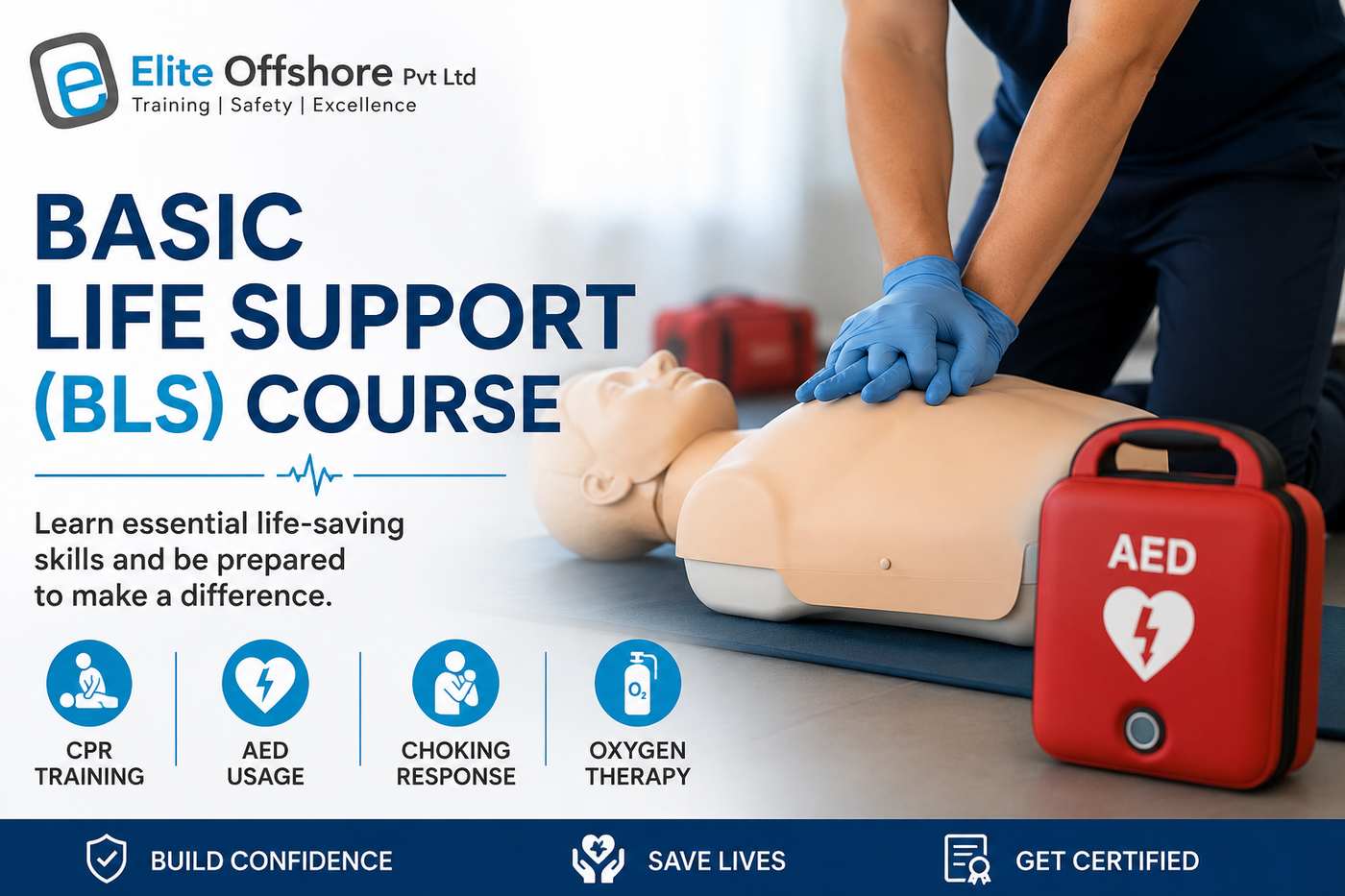
Basic Life Support (BLS) Course: Learn CPR, AED Use and Emergency Response Skills
Mon, 10 Aug 2026
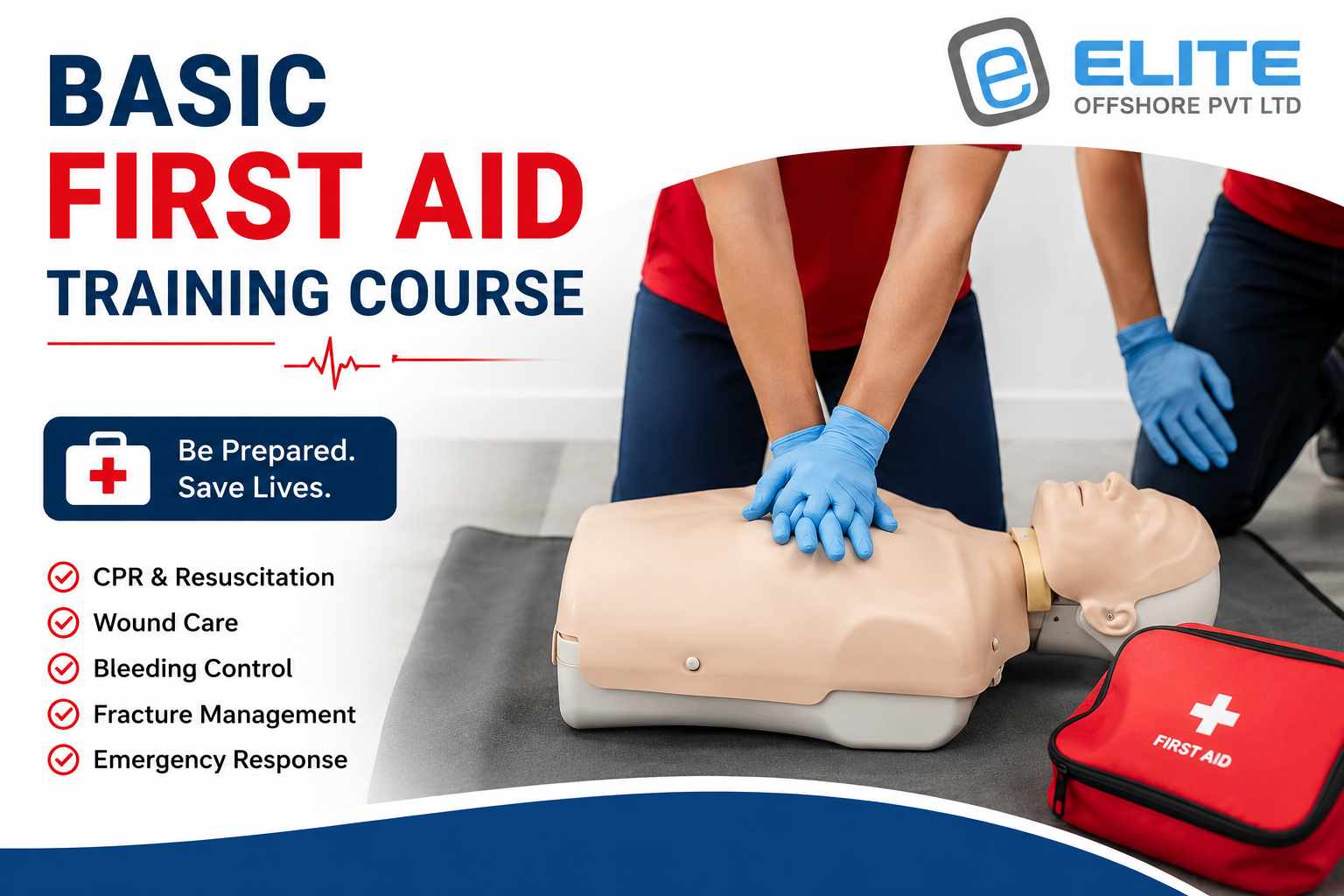
Basic First Aid Training Course: A Skill That Can Save Lives at Work
Wed, 05 Aug 2026
Write a public review